, to see if you have full access to this publication.
Edited Book No access
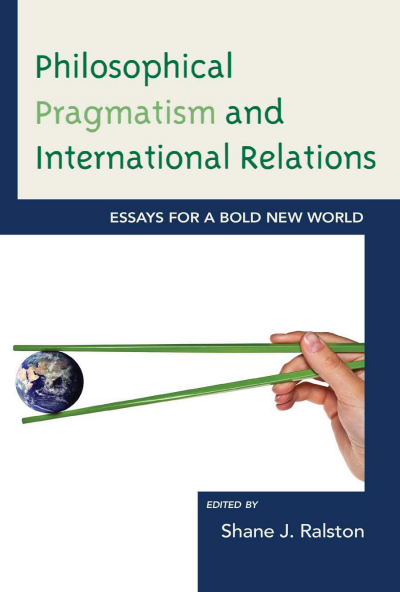
Philosophical Pragmatism and International Relations
Essays for a Bold New World
Editors:
Publisher:
2013
Summary
What are the implications of philosophical pragmatism for international relations theory and foreign policy practice? According to John Ryder, “a foreign policy built on pragmatist principles is neither naïve nor dangerous. In fact, it is very much what both the U.S. and the world are currently in need of.” Close observers of Barack Obama’s foreign policy statements have also raised the possibility of a distinctly pragmatist approach to international relations. Absent from the three dominant theoretical perspectives in the field—realism, idealism and constructivism—is any mention of pragmatism, except in the very limited, instrumentalist sense of choosing appropriate foreign policy tools to achieve proposed policy objectives. The key commitments of any international relations approach in the pragmatist tradition could include a flexible approach to crafting policy ends, theory integrally related to practice, a concern for both the normative and explanatory dimensions of international relations research, and policy means treated as hypotheses for experimental testing. Following the example of classic pragmatists such as John Dewey and neo-pragmatists like Richard Rorty, international relations scholars and foreign policy practitioners would have to forgo grand theories, instead embracing a situationally-specific approach to understanding and addressing emerging global problems. Unfortunately, commentary on the relationship between philosophical pragmatism and international relations has been limited. The authors in Philosophical Pragmatism and International Relations remedies this lacuna by exploring ways in which philosophical pragmatism, both classic and contemporary, can inform international relations theory and foreign policy practice today.
Search publication
Bibliographic data
Edition
1/2013
Copyright Year
2013
ISBN-Print
978-0-7391-6825-7
ISBN-Online
978-0-7391-8377-9
Publisher
Lexington, Lanham
Language
English
Pages
228
Product Type
Edited Book
Table of contents
ChapterPages
Contents No access
Acknowledgments No access
Foreword No access Pages 1 - 8
Introduction No access Pages 9 - 24
1 On Pragmatism and International Relations No access Pages 25 - 50
2 Getting Beyond International Relations Theory No access Pages 51 - 70
3 Pragmatism, Militarism, and Political Unity No access Pages 71 - 86
4 Pragmatism, Peacekeeping, and the Constabulary Force No access Pages 87 - 110
5 Justice and Global Communities of Inquiry No access Pages 111 - 126
6 Science, Values, and Democracy in the Global Climate Change Debate No access Pages 127 - 158
7 Obama’s Pragmatism in International Relations: Appropriate or Appropriation? No access Pages 159 - 176
8 Presidential Rhetoric and Pragmatism’s Possibilities No access Pages 177 - 194