, to see if you have full access to this publication.
Monograph No access
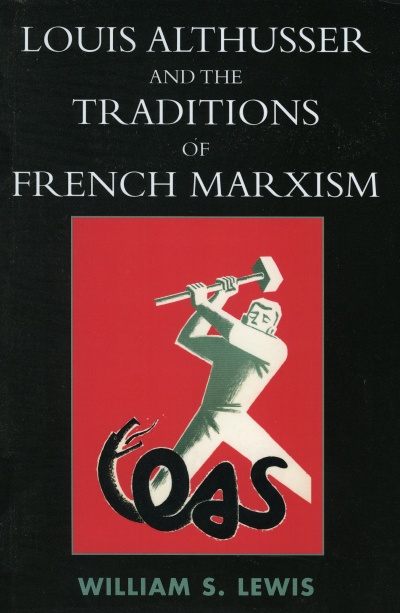
Louis Althusser and the Traditions of French Marxism
Authors:
Publisher:
2005
Summary
Throughout the course of the twentieth century communism has enjoyed direct competition with all other governmental and economic systems. Often, communist countries produced their own special brand of party intellectual. These figures rightly occupied their place within their own national context and within the context of the International. Some communist intellectuals, through the high level of erudition exhibited in their writing, have received a wider reception, despite their direct linkage to party politics e.g. Antonio Gramsci, Georg Lukacs, and, Victor Serge are good examples. After 1956, when Kruschev exposed Stalin's atrocities to the Twentieth Congress of the Communist Party of the Soviet Union and, as a result, to the entire world, Marxist philosophy was widely discredited. It had been assumed that Stalin's excesses were somehow encouraged or supported through Marx's thought. When, in the mid 1960s, Louis Althusser first offered his re-readings of Marx's philosophy it, and communist political practice, were in ruin. However Althusser was in a unique cultural and historical position. Thinking and writing concomitant with the structuralists and poststructuralists in France and also having access to certain theoretical tools while, simultaneously, committing himself entirely to Marxist thought-Althusser was, conceivably the last of his tradition. He was a Marxist philosopher who, unlike Sartre at the end of his life, did not abandon communism to, for instance existentialism. In Louis Althusser and the Traditions of French Marxism William Lewis gives readers a striking example of intellectual biography and critical theory. His approach, considering the work and life of Althusser within French Marxism and French intellectual culture, fills a void in contemporary scholarship. But, much more importantly, Lewis is able to show how Althusser's thought is the result of and a response to specific French intellectual and political traditions of reading Marx. It is through this combination of concerns that Louis Althusser and the Traditions of French Marxism offers us a contemporary and poignant Althusser whose ideas, under the weight of Lewis's pen, can help us better understand what resources it may hold for philosophy, political thought, and cultural thought today.
Search publication
Bibliographic data
Edition
1/2005
Copyright Year
2005
ISBN-Print
978-0-7391-1307-3
ISBN-Online
978-0-7391-5734-3
Publisher
Lexington, Lanham
Language
English
Pages
239
Product Type
Monograph
Table of contents
ChapterPages
Contents No access
Acknowledgments No access
Introduction: Why Marxism? Why French Marxism? No access Pages 1 - 20
1 The PCF and French Intellectual Marxism: Paternity and Patterns No access Pages 21 - 28
2 The PCF 1920-1923: Origins, Events, and Foundations No access Pages 29 - 46
3 The PCF 1923-1945: Theoretical and Pedagogical Positions on Marx No access Pages 47 - 82
4 French Intellectual Marxism, 1920-1945 No access Pages 83 - 114
5 French Marxist Thought 1940-1956: Approaching Crisis No access Pages 115 - 154
6 The Purification of Theory No access Pages 155 - 188