, to see if you have full access to this publication.
Monograph No access
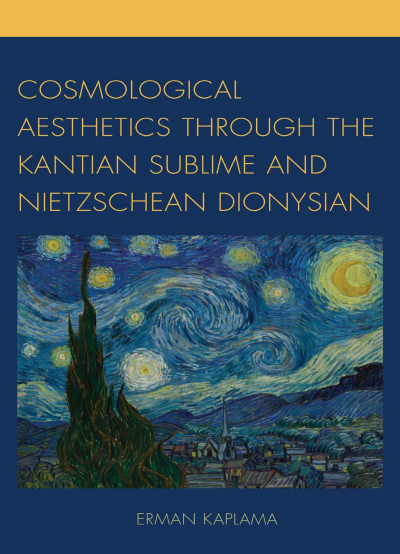
Cosmological Aesthetics Through the Kantian Sublime and Nietzschean Dionysian
Authors:
Publisher:
2013
Summary
Erman Kaplama explores the principle of transition (Übergang) from metaphysics to physics developed by Kant in his unfinished magnum opus, Opus Postumum. Drawing on the Heraclitean logos and Kant’s notions of sense-intuition (Anschauung) and reflective judgment, Kaplama interprets transition as an aesthetic principle. He revises the idea of nature (phusis) as the principle of motion referring to Heraclitus’ cosmology as well as Heidegger’s and Nietzsche’s lectures on the pre-Socratics. Kaplama compares the Kantian sublime and Nietzschean Dionysian as aesthetic theories representing the transition from the sensible to supersensible and as cosmological theories that consider human nature (ethos) as an extension of nature. In light of such Nietzschean notions as the eternal recurrence and will to power, the Dionysian is shown to trigger the transition by which nature and art are redefined. Finally, Cosmological Aesthetics employs the principles of transition and motion to analyze Van Gogh’s Starry Night in an excursus.
Keywords
Search publication
Bibliographic data
Edition
1/2013
Copyright Year
2013
ISBN-Print
978-0-7618-6156-0
ISBN-Online
978-0-7618-6259-8
Publisher
Hamilton Books, Lanham
Language
English
Pages
207
Product Type
Monograph
Table of contents
ChapterPages
Contents No access
Acknowledgments No access
Introduction No access
Prelude: The Heraclitean Logos and the Principle of Transition No access
On the Principle of Transition as the Foundation of Cosmological Aesthetics with Reference to Opus Postumum No access
On the Human Faculty of Sense-Intuition (Anschauung) through which the Transition Takes Place No access
On the Power of Judgment as the Faculty that Regulates and Determines the Transition No access
The Principle of Transition and Cosmological Transcendentalism No access
The Kantian Sublime as a Theory of Cosmological Aesthetics Representing the Transition No access
The Nietzschean Dionysian as a Theory of Cosmological Aesthetics Representing the Transition No access
On the Principle of Transition as Genius in Kantian and Nietzschean Aesthetics No access
Conclusion No access
Prelude: Heraclitean Phusis as the Principle of Motion No access
Kant’s Principle of Motion and Metaphysics of Nature No access
Nietzsche’s Principle of Motion and the Dionysian as a Cosmological Principle No access
Conclusion No access
Excursus: A Cosmological-Aesthetic Analysis Of Van Gogh’s Starry Night No access Pages 162 - 174