, to see if you have full access to this publication.
Edited Book No access
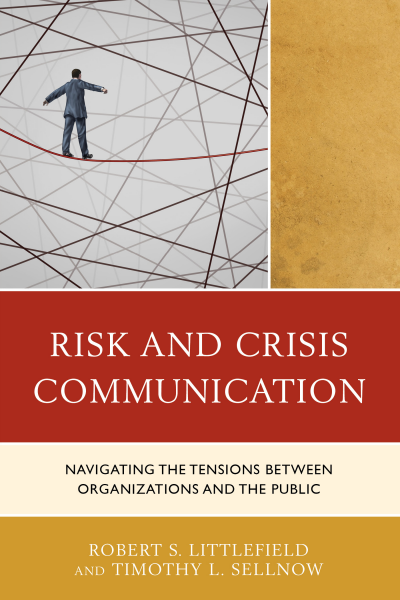
Risk and Crisis Communication
Navigating the Tensions between Organizations and the Public
Editors:
|
Publisher:
2015
Summary
Risk and Crisis Communication addresses how the interaction between organizations and their stakeholders manifests during a risk or crisis situation.Littlefield and Sellnow contend that when best practices are considered, there are certain tensions to which an organization responds. These tensions are similar to those experienced among individuals when managing their relationships. As such, Littlefield and Sellnow apply an interpersonal theory, known as relational dialectics (RDT), to risk and crisis communication and examine the outcome from the vantage point of the officials and the public. Previous research has focused on top-down, sender-oriented communication to evaluate the effectiveness of particular strategies used by spokespeople to repair public image or relay an apology. In contrast, Littlefield and Sellnow’s approach relies on culture-centeredness and suggests how cultural elements may have influenced the kinds of tensions each organization faced. Risk and Crisis Communication exemplifies the use of RDT through seven case studies, each focusing on one of the tensions, making it of interest to both scholars and organizational leaders.
Keywords
Search publication
Bibliographic data
Edition
1/2015
Copyright Year
2015
ISBN-Print
978-1-4985-1789-8
ISBN-Online
978-1-4985-1790-4
Publisher
Lexington, Lanham
Language
English
Pages
154
Product Type
Edited Book
Table of contents
ChapterPages
Contents No access
Introduction to the Dialectical Tensions of Risk and Crisis Communication No access Pages 1 - 12
Chapter One. Adding the Focus on Culture as a Best Practice No access Pages 13 - 24
Chapter Two. The Tension of Timeliness: How Timing Proved Costly for Peanut Corporation of America No access Pages 25 - 38
Chapter Three. The Tension of Openness: An Examination of Menu Foods’ Organizational Disclosure during the 2007 Pet-Food Recall No access Pages 39 - 56
Chapter Four. The Tension of Certainty The Mistakes of the E. coli Outbreak in Europe No access Pages 57 - 74
Chapter Five. The Tension of Organizational Interest: China’s 2008 Melamine Milk Crisis No access Pages 75 - 88
Chapter Six. The Tension of Taking Responsibility: The Failings of Del Bueno in the Queso Fresco Crisis No access Pages 89 - 102
Chapter Seven. The Tension of Controlling the Narrative: Construing and Mis-Construing Risk Messages No access Pages 103 - 122
Chapter Eight. The Tension of Emotional Connection: Health Literacy and the 2010 Salmonella Egg Recall No access Pages 123 - 138
Chapter Nine. Reflecting on Dialectical Tensions in Risk and Crisis Communication: Lessons Learned and Future Opportunities No access Pages 139 - 148