, to see if you have full access to this publication.
Edited Book No access
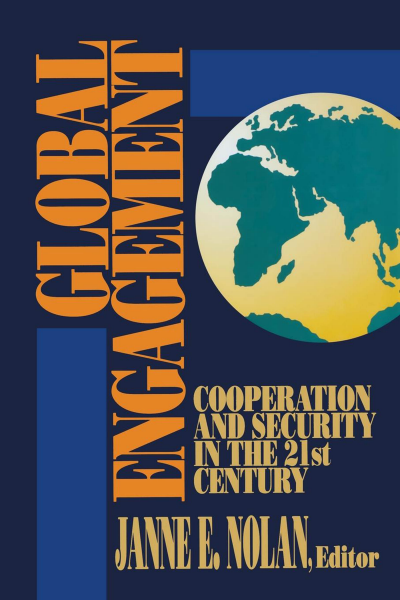
Global Engagement
Cooperation and Security in the 21st Century
Editors:
Publisher:
2010
Summary
Worldwide political changes have presented a unique opportunity for forging a new basis of international security relations. The end of the cold war, the dissolution of the Soviet Union, and the ascending role of the United Nations in regional security affairs have transformed the driving issues of international security. These changes both heighten the demand and offer the potential for global cooperation on an unprecedented scale. Traditional security preoccupations and the foundations of past strategybased on preparation for massive military confrontationare no longer appropriate. Now world leaders must find alternative strategies to ensure international safety. This book brings together a prominent group of experts, including several recently appointed government officials, to examine an alternative form of security, one that emphasizes collaborative rather than confrontational relationships among national military establishment. Global Engagement offers a complete analysis of the concept of cooperative security, which seeks to establish international agreements to regulate the size, technical composition, investment patterns, and operational practices of all military forces for mutual benefit. It explains how cooperative security also aims to create mechanisms to prevent the proliferation of weapons of mass destruction and regional conflict. The contributors identify the trends motivating the movement toward cooperative security and analyze the implications for practical policy action. They examine the problem of controlling advanced conventional munitions, analyze an integrated control arraignment, discuss international principles of equity and their relationship to problems of security, and offer regional political perspectives while considering social regional security problems. With the altered security environment, cooperation has clearly become the new strategic imperative. Policymakers are challenged to dispose of large arsenals of conventional and nuclear weapons and redirect their efforts to support preventative management of security conditions. Leading the discussion of the security challenges ahead, the authors of this volume debate the utility of cooperative engagement for future strategy.
Search publication
Bibliographic data
Edition
1/2010
Copyright Year
2010
ISBN-Print
978-0-8157-6098-6
ISBN-Online
978-0-8157-1672-3
Publisher
Rowman & Littlefield, Lanham
Language
English
Pages
623
Product Type
Edited Book
Table of contents
ChapterPages
Contents No access
1. The Concept of Cooperative Security No access
2. The Imperatives for Cooperation No access
3. Regime Architecture: Elements and Principles No access
4. Cooperative Security: Assessing the Tools of the Trade No access
5. Cooperative Security and the Political Economy of Nonproliferation No access
6. Military Action: When to Use It and How to Ensure Its Effectiveness No access
7. Global Institutions in a Cooperative Order: Does the United Nations Fit? No access
8. Cooperative Security in Europe No access
9. Emerging States and Military Legacies in the Former Soviet Union No access
10. Cooperative Security in the Middle East No access
11. Cooperative Security in the Asia-Pacific Region No access
12. Cooperative Security and South Asian Insecurity No access
13. The Collapsing State and International Security No access
14. Cooperative Security in the United States No access
15. Cooperative Security and the Former Soviet Union: Near-Term Challenges No access