, to see if you have full access to this publication.
Monograph No access
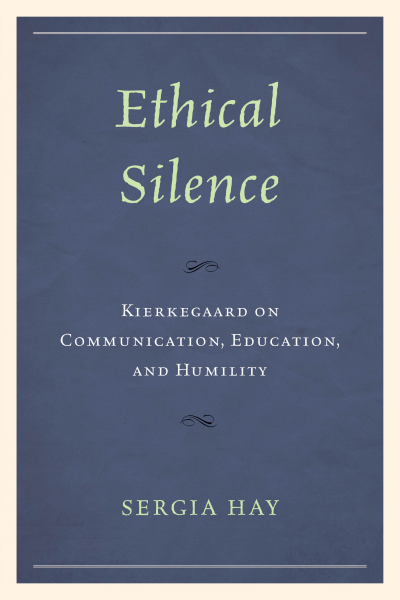
Ethical Silence
Kierkegaard on Communication, Education, and Humility
Authors:
Publisher:
2020
Summary
Ethical Silence: Kierkegaard on Communication, Education, andHumility examines a new area of Kierkegaard scholarship: the ethical value of silence. Through exegesis of Kierkegaard’s later writings, works in what is known as his second authorship, Sergia Hay argues that silence is an essential element of his Christian ethics. Starting with an overview of Kierkegaard’s ideas concerning ethics and communication, Hay builds a case for a Kierkegaardian notion of ethical silence by showing how silence contributes to the fulfillment of ethical imperatives by halting chatter, setting the “fundamental tone” for ethical activity, curbing excessive self-love, and providing another mode for educating and expressing love. Most importantly, silence can be used to humble the self and elevate the neighbor, creating conditions of Christian equality. Ethical silence is not the silence of the ineffable or what cannot be said, this is the silence of what can be said but should not.
Keywords
Search publication
Bibliographic data
Edition
1/2020
Copyright Year
2020
ISBN-Print
978-1-7936-1448-3
ISBN-Online
978-1-7936-1449-0
Publisher
Lexington, Lanham
Language
English
Pages
109
Product Type
Monograph
Table of contents
ChapterPages
Contents No access
Acknowledgements No access
Sigla for Kierkegaard’s Works No access
Introduction No access Pages 1 - 4
1 Silence in Kierkegaard’s Stages No access Pages 5 - 12
2 Kierkegaard’s Ethics No access Pages 13 - 30
3 Language and Communication No access Pages 31 - 48
4 Silence No access Pages 49 - 60
5 Ethical Silence No access Pages 61 - 76
6 Exemplars of Communication No access Pages 77 - 88