, to see if you have full access to this publication.
Monograph No access
Epictetus and Laypeople
A Stoic Stance toward Non-Stoics
Authors:
Publisher:
2020
Summary
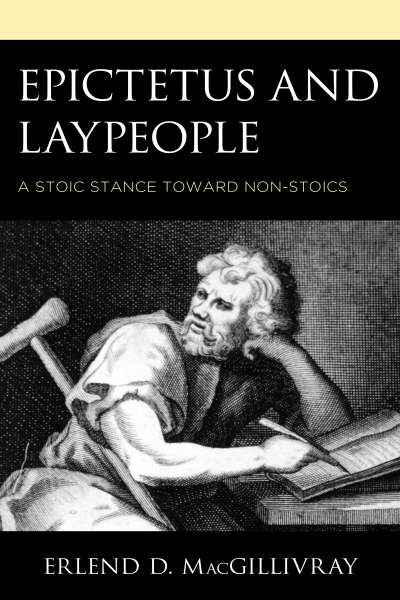
Erlend D. MacGillivray’s Epictetus and Laypeople: A Stoic Stance toward the Rest of Humanity explores the understanding that ancient philosophers had towards the vast majority of people at the time, those who had no philosophical knowledge or adherence—laypeople. After exploring how philosophical identity was established in antiquity, this book examines the Stoic philosopher Epictetus, who reflected upon laypeople with remarkable frequency. MacGillivray shows that Epictetus maintained his stance that a small and distinguishable group of philosophically aware individuals existed, alongside his conviction that most of humanity can be inclined to act in accordance with virtuous principles by their dependence upon preconceptions, civic law, popular religion, exempla, and the adoption of primitive conditions, among other means. This book also highlights other Stoics and their commentators to show that the means of lay reform that MacGillivray explores were not just implicitly understood in antiquity, but reveal a well-developed system of thought in the school which has, until now, evaded the notice of modern scholars.
Keywords
Search publication
Bibliographic data
Edition
1/2020
Copyright Year
2020
ISBN-Print
978-1-7936-1823-8
ISBN-Online
978-1-7936-1824-5
Publisher
Lexington, Lanham
Language
English
Pages
216
Product Type
Monograph
Table of contents
ChapterPages
Dedication No access
Contents No access
Acknowledgments and Dedication No access
Introduction No access
Chapter 1 Establishing a Philosophical Identity in Antiquity No access Pages 1 - 40
Chapter 2 Limitations on Moral Advancement No access Pages 41 - 66
Chapter 3 The Selective Engagement of Laypeople No access Pages 67 - 86
Chapter 4 Nonscholastic Instruction and Primitive Humanity No access Pages 87 - 110
Chapter 5 Preconceptions No access Pages 111 - 124
Chapter 6 Civic Religion and Law No access Pages 125 - 144
Chapter 7 Exempla No access Pages 145 - 180
Conclusion and Suggestionsfor Future Research No access Pages 181 - 184