, to see if you have full access to this publication.
Monograph No access
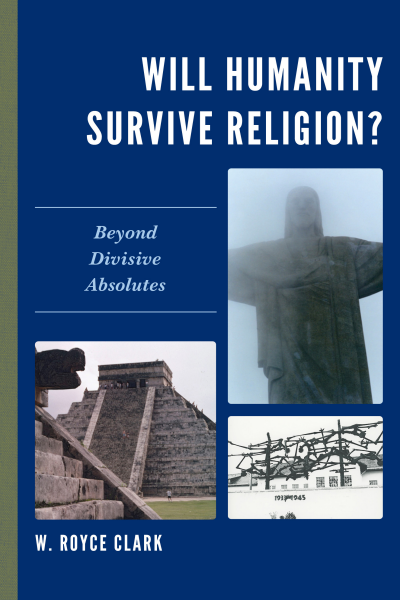
Will Humanity Survive Religion?
Beyond Divisive Absolutes
Authors:
Publisher:
2020
Summary
When the “human sciences” in the West followed the physical sciences in the 18th and 19th centuries with new measurements, methods, and language, the “metaphysics of infinity” lost its credibility. The response of Western religions was to retrench in a stronger authoritarianism, especially by the last half of the 19th century. While the new human sciences were being extended even to study the history and philosophy of religions, those religions themselves placed more emphasis on their understanding of the Absolute or Unquestionable. That split became a burden both to those who were religious and to those who were not.
Here, W. Royce Clark argues that humanity’s survival may depend on the development of a universal or inclusive ethic in which religions move beyond their Absolutes. Clark poses the sharp challenge: Are religious communities ready to abandon the foundations that until now they have insisted were the only adequate foundation for ethics?
Keywords
Search publication
Bibliographic data
Edition
1/2020
Copyright Year
2020
ISBN-Print
978-1-9787-0855-6
ISBN-Online
978-1-9787-0856-3
Publisher
Lexington, Lanham
Language
English
Pages
540
Product Type
Monograph
Table of contents
ChapterPages
Dedication No access
Contents No access
Preface and Acknowledgments No access
Preliminary ConsiderationsThe “Camel” Burdened with aMetaphysical Absolute No access Pages 1 - 12
Chapter 1 Religion’s Divisive Burden as Absolutism in a Scientific and Pluralistic Age No access Pages 13 - 56
Chapter 2 The Absolute’s Divisive Burden in Segregating Humanity No access Pages 57 - 98
Chapter 3 Inflexible Faith in the Absolute No access Pages 99 - 128
Chapter 4 The Absolute and Its Burden of Miracles, Mystery, and Authority No access Pages 129 - 168
Chapter 5 Fantasy versus Reality No access Pages 169 - 220
Chapter 6 Inhumane Faith No access Pages 221 - 272
Chapter 7 The Burden of Religion’s Historical/Mythical Claims and the Slippage of Categories No access Pages 273 - 312
Chapter 8 The “Ugly Ditch” No access Pages 313 - 384
Chapter 9 That Same “Ditch” No access Pages 385 - 436
Chapter 10 The Greatest Burden “After Auschwitz” No access Pages 437 - 492
Chapter 11 Conclusion and Challenges No access Pages 493 - 506
Bibliography No access Pages 507 - 518
Index No access Pages 519 - 538
About the Author No access Pages 539 - 540
Similar publications
from the topics "Religion und Theologie allgemein"