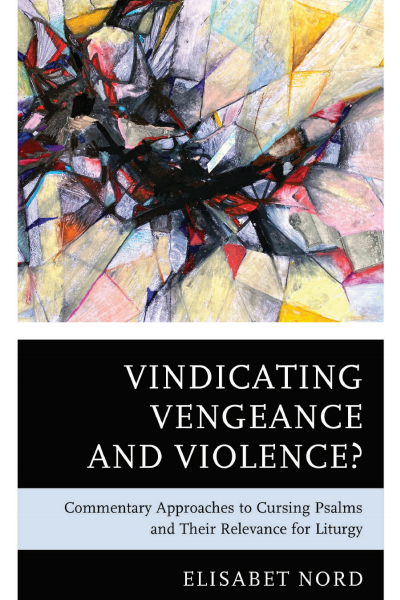
Vindicating Vengeance and Violence?
Commentary Approaches to Cursing Psalms and their Relevance for Liturgy- Authors:
- Publisher:
- 2023
Summary
Psalms that seem to vindicate vengeance and violence are generally omitted from liturgy, as exemplified in most breviaries used by worshipping communities around the world. Although seldom read, the so-called cursing psalms are known to many as their imprecatory passages pose challenges for readers who wish to use the entire Book of Psalms as their book of prayer. Because passages that call for vengeance and violence are present throughout the psalm collection and often “intertwined with the most exquisite things,” as noted by C. S. Lewis, both liturgists and laypeople need to find substantial hermeneutical strategies that can help answer what to make of imprecatory passages. But despite the ample exegetical advice made available through commentary literature, past and present, worshippers are stuck at a point of convergence between exegetical support and liturgical rejection. Through the process of metacommentary on Psalms 58, 109, 137, and 139, Elisabet Nord identifies three popular and generic hermeneutical approaches often applied to cursing psalms, including the tacit preconceived notions of these prominent approaches. The latter helps to uncover the liturgical relevance—and sometimes lack thereof—of scholarly advice on how to interpret and navigate psalms calling for vengeance and violence as prayers.
Keywords
Search publication
Bibliographic data
- Edition
- 1/2023
- Copyright Year
- 2023
- ISBN-Print
- 978-1-9787-1575-2
- ISBN-Online
- 978-1-9787-1576-9
- Publisher
- Lexington, Lanham
- Language
- English
- Pages
- 300
- Product Type
- Monograph
Table of contents
- Contents No access
- Preface No access
- Permissions No access
- Practicalities and Abbreviations No access
- 1.1.1. Problematic Psalms Omitted from Liturgy No access
- 1.1.2. Point of Reference: LOTH as Primary Example No access
- 1.1.3. Pastorally Motivated Change of Perspective No access
- 1.2.1. Psalms Chosen and Perspectives Covered No access
- 1.2.2. Metacommentary as Mode of Procedure No access
- 1.2.3. Commentaries as Primary Study Object No access
- 1.2.4. Pertinence for Liturgy: A Concern for ‘Interested Readers’ No access
- 1.3.1. Works on Interpretative Strategies Applicable to Psalms No access
- 1.3.2. Transformative Power of Psalms Read as Prayer No access
- 1.4. Preparations for the Pursuit No access
- 2.1. Approaching the Text No access
- 2.2.1. Commentaries on the Call for Retribution No access
- 2.2.2. Commentaries on the Call for Violence No access
- 2.2.3. Mitigating Response to the Psalm in General No access
- 2.3.1. A Prayer That Submits Vengeance to God No access
- 2.3.2. Figurative Language No access
- 2.3.3. A Cry from Below No access
- 2.3.4. A Longing for Justice No access
- 3.1. Approaching the Text No access
- 3.2.1. Commentaries on the Call for Violence (vv. 6–9) No access
- 3.2.2. Commentaries on the Acclamation of Vengeance (v. 10) No access
- 3.2.3. Mitigating Responses to the Psalm in General No access
- 3.3.1. More ‘Justice’ than ‘Vengeance’ No access
- 3.3.2. A Cry from Below No access
- 3.3.3. Cathartic Prayer No access
- 3.3.4. Figurative Language No access
- 4.1. Approaching the Text No access
- 4.2.1. Commentary Responses to the Call for Vengeance No access
- 4.2.2. Commentary Responses to the Call for Violence No access
- 4.2.3. Mitigating Responses to the Psalm in General No access
- 4.3.1. Not a Psalm of Vengeance but of ‘Justice’ No access
- 4.3.2. Words with Cathartic Effect No access
- 4.3.3. A Cry from Below No access
- 5.1. Approaching the Text No access
- 5.2.1. Mitigating Responses to the Psalm in General No access
- 5.2.2. Commentaries on the Call for Violence (vv. 19–20) No access
- 5.2.3. Commentaries on the Call for Hatred (vv. 21–22) No access
- 5.3.1. A Psalm of ‘Justice’ No access
- 5.3.2. A Cathartic Prayer No access
- 5.3.3. A Circumstantially Motivated Prayer No access
- 6.1. Popular Hermeneutical Approaches No access
- 6.2.1. Preconceived Notions Uncovered through a ‘Meta-commentary’ Perspective No access
- 6.2.2. Pertinence for Liturgy: LOTH as Predominant Example No access
- 7.1.1. Psalms 137 and 58 as Example Texts No access
- 7.2.1. Attitudes Toward Revenge, Past and Present No access
- 7.2.2. Can ‘Justice’ and ‘Vengeance’ Be Used Interchangeably? No access
- 7.2.3. Thick Concepts and Thin Agreements No access
- 7.2.4. Separating Personal and Impersonal Longings No access
- 7.2.5. A God of Justice or of Vengeance? Theological Implications No access
- 7.2.6. Conclusions Based on the Philosophical Excursus No access
- 7.3.1. Prayer as Impersonal Activity? No access
- 7.3.2. Perhaps a Liturgically Adjusted Translation? No access
- 7.4. The Approach’s Pertinence for Liturgy No access
- 8.1.1. Psalm 109 as Example Text No access
- 8.2.1. The Motif of the Poor and Armenfrömmigkeit in Psalms No access
- 8.2.2. The Approach’s Pastoral Appeal No access
- 8.2.3. Defining ‘Poverty’ and the Speaker’s Identity No access
- 8.2.4. Revisiting Ps 109 No access
- 8.2.5. Conclusions Based on the Exegetical Evaluation No access
- 8.3.1. Vocalizing Scripture with First-Person Pronouns No access
- 8.3.2. Psalms as ‘Appropriation of Speech’ No access
- 8.3.3. Praying ‘From Below’ in the Presence or on Behalf of Others No access
- 8.3.4. Prayer Against a ‘Faceless’ Enemy No access
- 8.3.5. Conclusions Based on the Liturgical Evaluation No access
- 8.4. The Approach’s Pertinence for Liturgy No access
- 9.1.1. Psalms 139 and 137 as Example Texts No access
- 9.2.1. Psalms as ‘Brutally Honest Prayers’ No access
- 9.2.2. Prayer as Means of Letting Go and Holding Back No access
- 9.2.3. Conclusions Based on the Psychologically Oriented Evaluation No access
- 9.3.1. Prayer and Ethical Formation No access
- 9.3.2. Psalms and the Hermeneutic of Self-Involvement No access
- 9.3.3. Psalms Revisited as Performative Texts No access
- 9.3.4. Distinguishing Violent Speech from Violent Action No access
- 9.3.5. Conclusions Based on the Liturgical Evaluation No access
- 9.4. The Approach’s Pertinence for Liturgy No access
- 10.1. Problematic Prayers No access
- 10.2. Proposed Solutions No access
- 10.3. Pertinence for Liturgy No access
- 10.4. Preferred Positions and Proposed Improvements No access
- 10.5. Potential Pitfall No access
- Bibliography No access Pages 271 - 290
- Index No access Pages 291 - 294
- Biblical References No access Pages 295 - 298
- About the Author No access Pages 299 - 300