, to see if you have full access to this publication.
Monograph No access
Sartre and the Phenomenology of Education
Education for Resistance
Authors:
Publisher:
2023
Summary
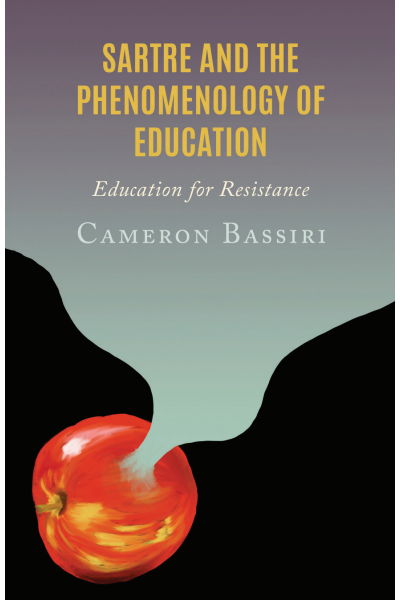
Through an engagement with texts that span the entirety of Sartre’s career, Sartre and the Phenomenology of Education: Education for Resistance provides phenomenological analyses of two primary orientations toward education. Cameron Bassiri develops a Sartrean approach to education, calling it “committed education,” and argues that such education is ultimately a form of resistance to need, scarcity, the practico-inert, and their cultural manifestations. Bassiri argues that a genuine, liberating form of education cultivates the imagination, instills the appropriate orientation to time in students, and ultimately produces a culture of collective imagining. He then develops its complementary opposite, institutionalized education, which is a form of passive acceptance, assimilation, and oppression. Oppressive approaches to education cultivate perception while repressing or instrumentalizing the imagination, impose an understanding of time on students, and ultimately produce a culture of perception and restricted, serialized imagining. Through these analyses, Bassiri demonstrates the importance of education for the formation of subjectivity, highlighting the role that existential psychoanalysis plays in teaching, as well as two distinct forms of the phenomenological reduction operative in the respective orientations toward education.
Keywords
Search publication
Bibliographic data
Edition
1/2023
Copyright Year
2023
ISBN-Print
978-1-6669-0517-5
ISBN-Online
978-1-6669-0518-2
Publisher
Lexington, Lanham
Language
English
Pages
222
Product Type
Monograph
Table of contents
ChapterPages
Contents No access
Acknowledgments No access
Introduction No access Pages 1 - 12
Education as Praxis No access
The Temporality of Committed Education No access
Literature and the Culture of the Imaginary No access
Education as Assimilation No access
The Temporality of Institutionalized Education No access
Institutionalized Culture as Perpetual Depersonalization No access