, to see if you have full access to this publication.
Edited Book No access
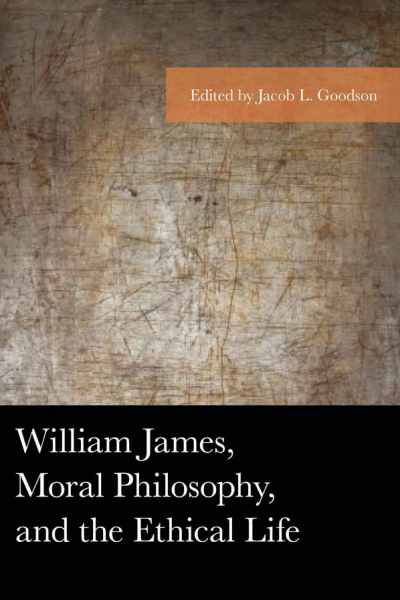
William James, Moral Philosophy, and the Ethical Life
Editors:
Publisher:
2017
Summary
Virtue theory, natural law, deontology, utilitarianism, existentialism: these are the basic moral theories taught in “Ethics,” “History of Philosophy,” and “Introduction to Philosophy” courses throughout the United States. When the American philosopher William James (1842 – 1910) find his way into these conversations, there is uncertainty about where his thinking fits. While utilitarianism has become the default position for teaching James’s pragmatism and radical empiricism, this default position fails to address and explain James’s multiple criticisms of John Stuart Mill’s formulaic approach to questions concerning the moral life. Through close readings of James’s writings, the chapters in William James, Moral Philosophy, and the Ethical Life catalogue the ways in whichJames wants to avoid the following: (a) the hierarchies of Christian natural law theory, (b) the moral calculus of Mill’s utilitarianism, (c) the absolutism and principle-ism of Immanuel Kant’s deontology, and (d) the staticity of the virtues found in Aristotle’s moral theory. Elaborating upon and clarifying James’s differences from these dominant moral theories is a crucial feature of this collection. This collection, is not, however, intended to be wholly negative – that is, only describing to readers what James’s moral theory is not. It seeks to articulate the positive features of James’s ethics and moral reasoning: what does it mean to an ethical life, and how should we theorize about morality?
Keywords
Search publication
Bibliographic data
Edition
1/2017
Copyright Year
2017
ISBN-Print
978-1-4985-0514-7
ISBN-Online
978-0-7391-9014-2
Publisher
Lexington, Lanham
Language
English
Pages
408
Product Type
Edited Book
Table of contents
ChapterPages
Contents No access
Acknowledgments No access
Introduction No access
Chapter 1 Emotions and Morals in No access
Chapter 2 Ethics and Emotion in William James’s No access
Chapter 3 Love and Sex in William James’s No access
Chapter 4 Blindnesses in James’s Day—and Beyond No access
Chapter 5 “To See or Not to See?” No access
Chapter 6 Horny Hands and Dirty Skin No access
Chapter 7 The Cries of the Wounded No access
Chapter 8 The Moral Life as the Basis for Moral Philosophy No access
Chapter 9 Regretting the Impossible No access
Chapter 10 The Will-to-Believe is Immoral No access
Chapter 11 Stoic Rhetoric and the Ethics of Empowered Individualism No access
Chapter 12 William James on Human Immortality No access
Chapter 13 A Radical Empiricist Defense of Irrationality No access
Chapter 14 Understanding the Warrior Spirit No access
Chapter 15 William James and Thomas Aquinas on the Fruits of Love and Saintliness No access
Chapter 16 William James as Virtue Ethicist No access
Chapter 17 Is James an Existentialist? No access
Chapter 18 The Cries of the Wounded in No access
Chapter 19 James on Pragmatism and Religion No access
Chapter 20 Leaping into the Gap No access
Chapter 21 The Moral Framework of No access
Chapter 22 The Education of Moral Character No access