, to see if you have full access to this publication.
Monograph No access
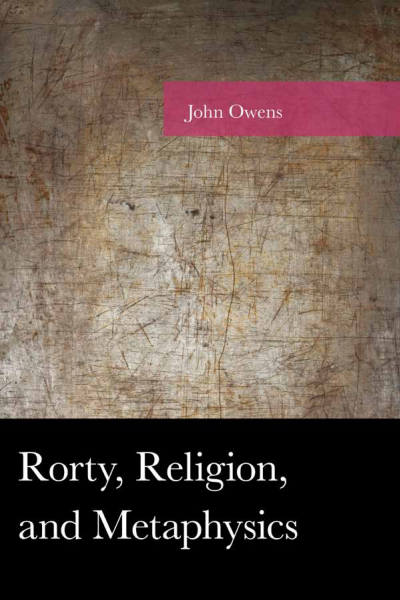
Rorty, Religion, and Metaphysics
Authors:
Publisher:
2019
Summary
Believing that humanity would be better off if it simply dropped its traditional religious and metaphysical beliefs, Richard Rorty proposes an alternative approach, drawn from the American pragmatist tradition, where things get their significance against a background of broad human interests, and knowledge is regarded as part of the active pursuit of a better world. Rorty, Religion, and Metaphysics argues that while Rorty’s case is clearly and robustly made, it is fundamentally challenged by the phenomenon of human recognition, the relationship that arises between people when they talk to one another. John Owens demonstrates that recognition, so central to human life, cannot be accommodated within Rorty’s proposals, given that it precisely attributes a reality to others that goes beyond anything a pragmatist framework can offer. It follows that there is more to human interaction than can be explained by Rorty’s pragmatism.
Search publication
Bibliographic data
Edition
1/2019
Copyright Year
2019
ISBN-Print
978-1-4985-6038-2
ISBN-Online
978-1-4985-6039-9
Publisher
Lexington, Lanham
Language
English
Pages
222
Product Type
Monograph
Table of contents
ChapterPages
Contents No access
Acknowledgments No access
Introduction No access Pages 1 - 12
The Silence of the World No access
Causal Relations and Relations of Justification No access
Debates with Charles Taylor No access
Debates with John Searle No access
Debates with Hilary Putnam No access
Further Controversies No access
An Alternative Metaphysics? No access
Notes No access
“Things Made” and “Things Found” No access
The Contemplative Ideal No access
MacIntyre’s Aristotelianism No access
Aristotelian Realism and Pragmatism No access
Notes No access
A Broad Notion of Pragmatism No access
The Notion of “Coping” No access
Rorty’s Modified Pragmatism No access
An Alternative Metaphysics? No access
Pragmatism as a Recommendation No access
A Pragmatist Vocabulary No access
Brandom on Existence No access
Notes No access
Defending Pragmatist Religion No access
The Costs of Pragmatist Religion No access
The Notion of Cultural Politics No access
Pragmatist Religion in Public Life No access
Religion and Democracy No access
Dewey’s “A Common Faith” No access
Notes No access
Pragmatism as Negative Theology No access
Pragmatist Religion and “Weak” Thought No access
Pragmatist Religion as a Personal Choice No access