, to see if you have full access to this publication.
Monograph No access
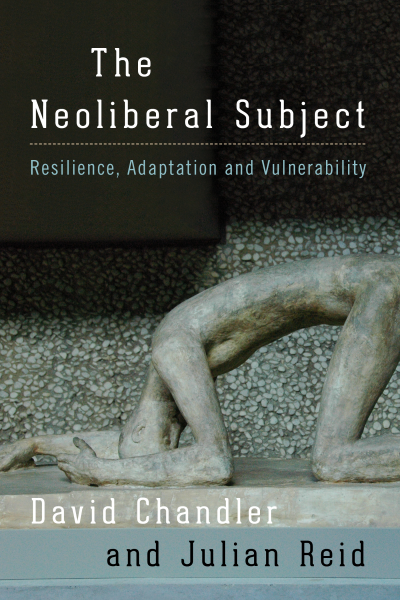
The Neoliberal Subject
Resilience, Adaptation and Vulnerability
Authors:
|
Publisher:
2016
Summary
Political practices, agencies and institutions around the world promote the need for humans, individually and collectively, to develop capacities of resilience. We must accept and adapt to the ‘realities’ of an endemic condition of global insecurity and to the practice of so-called sustainable development. But in spite of claims that resilience make us more adept and capable, does the discourse of resilience undermine our ability to make our own decisions as to how we wish to live?
This book draws out the theoretical assumptions behind the drive for resilience and its implications for issues of political subjectivity. It establishes a critical framework from which discourses of resilience can be understood and challenged in the fields of governance, security, development, and in political theory itself. Each part of the book includes a chapter by David Chandler and another by Julian Reid that build a passionate and provocative dialogue, individually distinct and offering contrasting perspectives on core issues. It concludes with an insightful interview with Gideon Baker. In place of resilience, the book argues that we need to revalorize an idea of the human subject as capable of acting on and transforming the world, rather than being cast in a permanent condition of enslavement to it.
Keywords
Search publication
Bibliographic data
Edition
1/2016
Copyright Year
2016
ISBN-Print
978-1-78348-772-1
ISBN-Online
978-1-78348-773-8
Publisher
Rowman & Littlefield, Lanham
Language
English
Pages
204
Product Type
Monograph
Table of contents
ChapterPages
Contents No access
Introduction No access Pages 1 - 8
1 Debating Neoliberalism No access Pages 9 - 16
2 Debating Neoliberalism No access Pages 17 - 24
3 Resilience No access
4 Resilience No access
5 Development as Adaptation No access
6 Adaptation No access
7 The Self-Construction of Vulnerability No access