, to see if you have full access to this publication.
Monograph No access
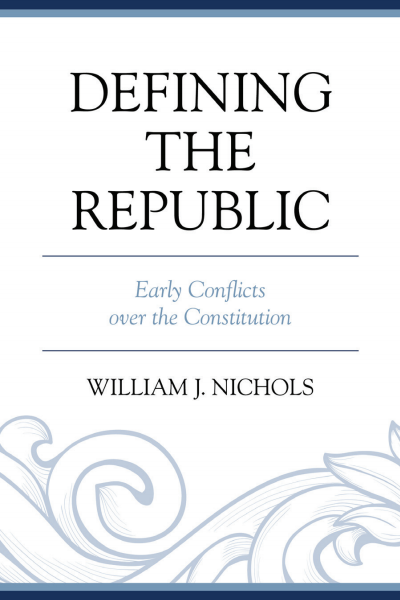
Defining the Republic
Early Conflicts over the Constitution
Authors:
Publisher:
2022
Summary
Debate over the meaning and purpose of the grand experiment called the United States has existed since its inception. Alexander Hamilton and James Madison worked closely together to achieve the ratification of the Constitution, which both considered essential for the survival of the United States. However, within just a few years of the Constitution’s ratification, they became bitter political enemies as the pair disagreed about what the United States should be like under the new Constitution, specifically how to interpret the Constitution they both worked to create and support.
Defining the Republic: Early Conflicts over the Constitution documents, through presentation of their own words, that these two essential early Americans simply had different expectations all along. Expectations that went unexamined during the frenetic times in which the Constitution was written, debated, and ratified.
It is to their differences that Americans today can look in order to better understand the history of the United States, as well as current debates over politics and life in general in the country Hamilton and Madison helped to create.
Keywords
Search publication
Bibliographic data
Edition
1/2022
Copyright Year
2022
ISBN-Print
978-1-7936-5536-3
ISBN-Online
978-1-7936-5537-0
Publisher
Lexington, Lanham
Language
English
Pages
116
Product Type
Monograph
Table of contents
ChapterPages
Contents No access
Introduction No access Pages 1 - 6
Definitions of a Republic from Other Authors No access Pages 7 - 22
Hamilton and Madison on Slavery No access Pages 23 - 32
Hamilton and Madison on France versus Great Britain No access Pages 33 - 42
Hamilton and Madison on Constitutional Interpretation No access Pages 43 - 54
Hamilton and Madison on Religion No access Pages 55 - 72
Hamilton on the Federal Government’s Role in the Economy No access Pages 73 - 88
Madison on the Federal Government’s Role in the Economy No access Pages 89 - 102