, to see if you have full access to this publication.
Monograph No access
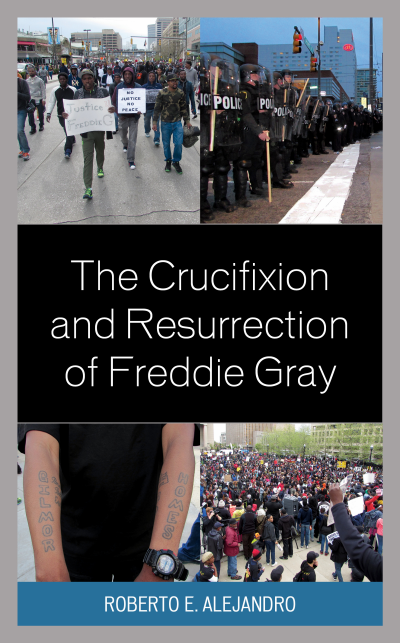
The Crucifixion and Resurrection of Freddie Gray
Authors:
Publisher:
2020
Summary
Beginning with Plato, and carried over in the Christian tradition, western political thought has been wedded to the proposition that justice and virtue can be achieved in history through the adoption of proper norms. Hannah Arendt termed this “the tyranny of truth,” and its effect is to transform politics into a religious exercise through commitments to metaphysical propositions like truth or goodness.
The tumultuous political aftermath that formed the wake of Freddie Gray's crucifixion in Baltimore, MD, is an example of politics turned religious exercise. In those politics, confessional commitments to propositions related to race, society, and structure came to dominate the interpretation of the killing of Gray's mortal body. But as Gray was resurrected in various forms in the weeks after his death, one consequence was that a very poor community had one of their sons stripped from them first by police violence, and then again through politics whose discursive violence appropriated Gray as proof of its own metaphysics.
Keywords
Search publication
Bibliographic data
Edition
1/2020
Copyright Year
2020
ISBN-Print
978-1-9787-0831-0
ISBN-Online
978-1-9787-0832-7
Publisher
Lexington, Lanham
Language
English
Pages
115
Product Type
Monograph
Table of contents
ChapterPages
Contents No access
Acknowledgments No access
1 The Tyranny of Truth and Politics as Religion No access Pages 1 - 10
2 On Background No access Pages 11 - 32
3 On Background No access Pages 33 - 44
4 The Crucifixion of Freddie Gray No access Pages 45 - 62
5 The Resurrection of Freddie Gray No access Pages 63 - 82
6 Watching These Things No access Pages 83 - 86
7 Confession, Hurricane Maria, and the Violence of Definition No access Pages 87 - 102
Bibliography No access Pages 103 - 108
Index No access Pages 109 - 114
About the Author No access Pages 115 - 115
Similar publications
from the topics "Religion und Theologie allgemein"