, to see if you have full access to this publication.
Monograph No access
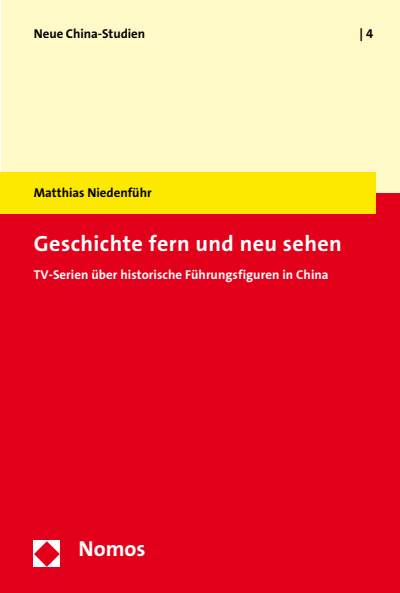
Geschichte fern und neu sehen
TV-Serien über historische Führungsfiguren in China- Authors:
- Series:
- Neue China-Studien, Volume 4
- Publisher:
- 2012
Search publication
Bibliographic data
- Edition
- 1/2012
- Copyright Year
- 2012
- ISBN-Print
- 978-3-8329-6667-6
- ISBN-Online
- 978-3-8452-3832-6
- Publisher
- Nomos, Baden-Baden
- Series
- Neue China-Studien
- Volume
- 4
- Language
- German
- Pages
- 455
- Product Type
- Monograph
Table of contents
ChapterPages
- Titelei/Inhaltsverzeichnis No access Pages 2 - 6Authors:
- Vorwort No access Pages 7 - 18Authors:
- Verzeichnis der Tabellen No access Pages 19 - 19Authors:
- Verzeichnis der Schaubilder No access Pages 19 - 19Authors:
- Verzeichnis der Abbildungen No access Pages 20 - 20Authors:
- Abkürzungsverzeichnis No access Pages 21 - 22Authors:
- Hinführung zum Thema No access Pages 23 - 25Authors:
- Fernsehen als wichtigstes Massenmedium Chinas No access Pages 25 - 28Authors:
- Formen des Geschichtsfernsehens in China No access Pages 28 - 34Authors:
- Charakteristika der historischen Fernsehserien in China No access Pages 34 - 36Authors:
- Vergleich mit dem Westen No access Pages 36 - 38Authors:
- Vergleich im ostasiatischen Kulturraum No access Pages 38 - 41Authors:
- Grundannahmen No access Pages 41 - 45Authors:
- Ziele der Untersuchung No access Pages 45 - 47Authors:
- Aufbau der Studie No access Pages 47 - 50Authors:
- Periodisierungsansätze No access Pages 51 - 53Authors:
- Gründungsphase (1958-1966) No access Pages 53 - 58Authors:
- Stillstand während der Kulturrevolution (1966-1976) No access Pages 58 - 58Authors:
- Authors:
- Ausstrahlung von ausländischen Serien No accessAuthors:
- Importe aus Japan No accessAuthors:
- Importe aus Hongkong, Taiwan und Singapur No accessAuthors:
- Phase der künstlerischen Entwicklung und Konsolidierung (1984-1989) No access Pages 66 - 68Authors:
- Phase der Entwicklung der Kulturindustrie (1990-2000) No access Pages 68 - 72Authors:
- Kommerzialisierungsphase (seit 2000) No access Pages 72 - 75Authors:
- Überblick über die historische Entwicklung der Fernsehserie No access Pages 75 - 76Authors:
- Begriffsklärung No access Pages 77 - 78Authors:
- Allgemeine Klassifikation von chinesischen Seriengenres No access Pages 78 - 79Authors:
- Kategorisierungsansätze für historische TV-Serien in China No access Pages 79 - 81Authors:
- Höfische Serien No access Pages 81 - 82Authors:
- Familiensagas No access Pages 82 - 82Authors:
- Kungfu-Serien und mythische Serien No access Pages 82 - 83Authors:
- Revolutionsserien No access Pages 83 - 84Authors:
- Authors:
- Xishuoju No accessAuthors:
- Zhengju No accessAuthors:
- Führungsfiguren in höfischen Serien No access Pages 88 - 88Authors:
- Authors:
- Serien zur Hochphase der Qingzeit No accessAuthors:
- Serien zur Spätphase der Qingzeit No accessAuthors:
- Authors:
- Mythische und semi-historische Figuren der Frühzeit No accessAuthors:
- Vorkaiserliche Zeit No accessAuthors:
- Qin-Zeit No accessAuthors:
- Han-Zeit No accessAuthors:
- Die Zeit der Drei Reiche No accessAuthors:
- Jin-Dynastie und Nördliche und Südliche Dynastien No accessAuthors:
- Sui-Zeit No accessAuthors:
- Tang-Zeit No accessAuthors:
- Song-Zeit No accessAuthors:
- Yuan-Zeit No accessAuthors:
- Ming-Zeit No accessAuthors:
- Vorbildrolle Taiwans und Hongkongs No access Pages 116 - 119Authors:
- Biographien wichtiger Führungsfiguren No access Pages 119 - 122Authors:
- Identitätsstiftende Ereignisse No access Pages 122 - 124Authors:
- Kampf gegen die japanische Aggression No access Pages 124 - 128Authors:
- Relevanz der TV-Serien No access Pages 129 - 133Authors:
- Produktionsmodus der Serien im Vergleich zum Ausland No access Pages 133 - 136Authors:
- Geschäftsmodell der Serien No access Pages 136 - 138Authors:
- Authors:
- Fan Xiuming No accessAuthors:
- Liang Jiashu No accessAuthors:
- Han Sanping No accessAuthors:
- Hu Mei No accessAuthors:
- Zhang Guoli No accessAuthors:
- Wang Wenjie No accessAuthors:
- Zhang Jizhong No accessAuthors:
- Chen Jialin No accessAuthors:
- Liu Wenwu No accessAuthors:
- Zhang Li No accessAuthors:
- You Xiaogang No accessAuthors:
- Gao Xixi No accessAuthors:
- Jiang Qitao No accessAuthors:
- Tang Guoqiang No accessAuthors:
- Chen Baoguo No accessAuthors:
- Siqin Gaowa No accessAuthors:
- Zhang Tielin No accessAuthors:
- Xu Huanshan No accessAuthors:
- Liu Dekai No accessAuthors:
- Vernetzung der kreativen Akteure No accessAuthors:
- Authors:
- China Television Drama Production Center No accessAuthors:
- Beijing Film Studio No accessAuthors:
- Huayi Brothers No accessAuthors:
- Authors:
- Rolle der Fernsehsender No accessAuthors:
- Television Broadcasts Limited No accessAuthors:
- China Central Television No accessAuthors:
- CCTV-8 No accessAuthors:
- Shanghai Drama TV No accessAuthors:
- Regionaler Einfluss No accessAuthors:
- Distributionsmodell No accessAuthors:
- Wandel der Aufgabe der Medien No access Pages 159 - 160Authors:
- Propagandaabteilung des ZK No access Pages 160 - 162Authors:
- Vorgängerministerien No access Pages 162 - 162Authors:
- Authors:
- Die Aufgaben von SARFT No accessAuthors:
- Administrative Abteilungen innerhalb von SARFT No accessAuthors:
- Regulierungsbüro für Fernsehserien No accessAuthors:
- Leitende Arbeitsgruppe No access Pages 167 - 169Authors:
- Weitere Prüfkomitees No access Pages 169 - 172Authors:
- Allgemeine Politische Abteilung der VBA No access Pages 172 - 173Authors:
- Authors:
- Forschungsabteilung für historische Dokumente des ZK No accessAuthors:
- Forschungsabteilung für die Parteigeschichte des ZK No accessAuthors:
- Akademie für Militärwissenschaften der VBA No accessAuthors:
- Sonstige beratende Akteure No access Pages 174 - 176Authors:
- Administration des Fernsehens allgemein No access Pages 177 - 181Authors:
- Importierte Fernsehprogramme No access Pages 181 - 183Authors:
- Gemeinschaftsproduktionen mit dem Ausland No access Pages 183 - 184Authors:
- Joint Ventures in der Fernsehproduktion No access Pages 184 - 185Authors:
- Lizenzierung der Produktion von Fernsehserien No access Pages 185 - 186Authors:
- Distributionslizenzen No access Pages 186 - 187Authors:
- Erwünschte Inhalte No access Pages 187 - 191Authors:
- Unerwünschte Inhalte No access Pages 191 - 196Authors:
- Regulierung von historischen Fernsehserien No access Pages 196 - 199Authors:
- Authors:
- Jährliches Berichtssystem No accessAuthors:
- Jährliche Fachtreffen No accessAuthors:
- Überprüfung vor Drehbeginn No accessAuthors:
- Authors:
- Landesweite monatliche Berichtspflicht No accessAuthors:
- Pflicht zur Abgabe detaillierter Vorabinformationen No accessAuthors:
- Ablehnung von Serien No accessAuthors:
- Klassifizierung von Themen nach historischer Epoche No accessAuthors:
- Unterkategorien der Klassifizierung No accessAuthors:
- Quantitative Analyse der Monatsberichte No accessAuthors:
- Spezialisierung der Zensoren und Optimierung des Zensurprozesses No accessAuthors:
- Die Sonderkategorien „Große Revolution“ und „Große Geschichte“ No accessAuthors:
- Personal hinter der Kamera No access Pages 225 - 227Authors:
- Personal vor der Kamera No access Pages 227 - 229Authors:
- Ausstrahlung No access Pages 229 - 231Authors:
- Kurzüberblick über den Inhalt No access Pages 231 - 234Authors:
- Authors:
- Li Hongzhang No accessAuthors:
- Yuan Shikai No accessAuthors:
- Kaiserinwitwe Cixi No accessAuthors:
- Patriotismus als gemeinsames Heldenkriterium No access Pages 242 - 249Authors:
- Aussagen von Autor und Produzent No access Pages 249 - 250Authors:
- Kritik der Wissenschaft No access Pages 250 - 254Authors:
- Öffentliche Debatten No access Pages 254 - 255Authors:
- Reaktion der Regulierungsbehörden No access Pages 255 - 260Authors:
- Personal hinter der Kamera No access Pages 261 - 263Authors:
- Personal vor der Kamera No access Pages 263 - 264Authors:
- Ausstrahlung No access Pages 264 - 266Authors:
- Kurzüberblick über den Inhalt No access Pages 266 - 267Authors:
- Darstellung der Hauptfiguren No access Pages 267 - 269Authors:
- Ausgewählte Lebensabschnitte No access Pages 269 - 275Authors:
- Diskussion in den Medien No access Pages 275 - 277Authors:
- Beschreibung des Idealtyps eines Volksdieners No access Pages 277 - 278Authors:
- Bekämpfung von Korruption, Nepotismus und Machtmissbrauch No access Pages 278 - 279Authors:
- Besonnene Reformen statt gewalttätiger Revolution No access Pages 279 - 281Authors:
- Rehabilitation des „Genossen Shaoqi“ No access Pages 281 - 282Authors:
- Konstruktion von Vorbildern und Feindbildern No access Pages 282 - 283Authors:
- Auslassung unerwünschter Themen No access Pages 283 - 286Authors:
- Ziele der Untersuchung No access Pages 287 - 288Authors:
- Typen der historischen historischen Erzählweise No access Pages 288 - 289Authors:
- Kategorien der Analyse No access Pages 289 - 289Authors:
- Authors:
- Verbreitung und erreichtes Publikum No accessAuthors:
- Radius und Gleichzeitigkeit der Ausstrahlung No accessAuthors:
- Ausstrahlungsdauer und serieller Charakter No accessAuthors:
- Intensität der Ausstrahlung No accessAuthors:
- Authors:
- Historische Erzählung No accessAuthors:
- Historische Romane No accessAuthors:
- Historische Theaterstücke No accessAuthors:
- Historische Filme No accessAuthors:
- Authors:
- Historizität No accessAuthors:
- Intertextualität und Intermedialität No accessAuthors:
- Konzentration auf Führungsfiguren No accessAuthors:
- Seifenoper-Charakter No accessAuthors:
- Authors:
- Illusion von Authentizität No accessAuthors:
- Historisierung No accessAuthors:
- Musikalische Effekte No accessAuthors:
- Symbole No accessAuthors:
- Authors:
- Historische Analogien No accessAuthors:
- Mehrdeutigkeit No accessAuthors:
- Moralisierung No accessAuthors:
- Exotisches und Vertrautes No accessAuthors:
- Einsatz von Spezialschauspielern No accessAuthors:
- Stereotype No accessAuthors:
- Mehrdimensionale Charaktere No accessAuthors:
- Humanisierung No accessAuthors:
- Individuum und Kollektiv No accessAuthors:
- Reframing von historischen Figuren und Ereignissen No accessAuthors:
- Anachronismen No accessAuthors:
- Selektion No accessAuthors:
- Authors:
- Retraditionalisierung und Affirmation der nationalen Geschichte No accessAuthors:
- Paradoxe Darstellung von Minoritäten und des Vielvölkerreichs No accessAuthors:
- Rolle der Ausländer No accessAuthors:
- Helden und Antihelden No accessAuthors:
- Geschichtsbilder und historische Akteure No accessAuthors:
- Paradigmenwechsel No accessAuthors:
- Authors:
- Förderung der nationalen Identität No accessAuthors:
- Territoriale Integrität No accessAuthors:
- Traum vom starken China No accessAuthors:
- Authors:
- Legitimation der Parteiherrschaft No accessAuthors:
- Korruptionsbekämpfung No accessAuthors:
- Authors:
- Historische Wahrheit und künstlerische Freiheit No accessAuthors:
- Geschichte als Domäne der Historiker No accessAuthors:
- Elitäre Haltung gegenüber dem Publikum No accessAuthors:
- Authors:
- Interessen der Zielgruppen No accessAuthors:
- Umgehung der Zensur No accessAuthors:
- Authors:
- Einfluss der Zensur auf die Ausstrahlung No accessAuthors:
- Zensur und Markt No accessAuthors:
- Polyphonie und Propaganda No accessAuthors:
- Dichotomie von Zensur und Öffentlichkeit No accessAuthors:
- Zensur als Rahmenbedingung in Japan und China No access Pages 325 - 326Authors:
- Gemeinsame Tradition der historischen Erzählung No access Pages 326 - 327Authors:
- Ausblick No access Pages 327 - 330Authors:
- Literaturverzeichnis No access Pages 331 - 358Authors:
- Auswahl historischer Figuren in chinesischen TV-Serien No access Pages 359 - 416Authors:
- Statistik der bei SARFT gemeldeten TV-Serien 2006-2010 No access Pages 417 - 418Authors:
- Ausgewählte Regulierungen No access Pages 419 - 438Authors:
- Stichwortverzeichnis No access Pages 439 - 455Authors: