, to see if you have full access to this publication.
Monograph No access
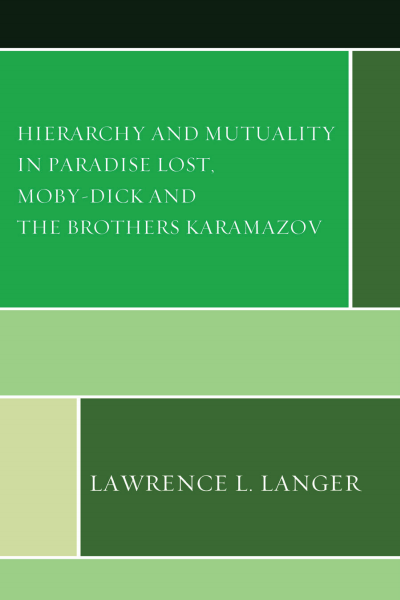
Hierarchy and Mutuality in Paradise Lost, Moby-Dick and the Brothers Karamazov
Authors:
Publisher:
2022
Summary
The three works considered in Hierarchy and Mutuality in Paradise Lost, Moby-Dick and The Brothers Karamazov display a striking overlap in their concern with hierarchy and mutuality as parallel and often intersecting way of how human beings relate to each other and to divine forces in the universe. All three contain adversarial protagonists whose stature often commands admiration from audiences less ready to confront their motives and deeds than to be swayed by their verbal harangues. Why the quest for personal power should disturb the serenity of mutual love with such compelling force is an issue that Milton, Melville and Dostoevsky address with varying degrees of self-consciousness. In their texts the seeds of disaster seem to sprout in both spiritual and barren soil, sometimes nurtured by a hierarchy that gave them birth, at others in reaction against a hierarchy that would stifle their energy. The purpose of this study is to analyze the origins and the consequences of such tensions.
Keywords
Search publication
Bibliographic data
Edition
1/2022
Copyright Year
2022
ISBN-Print
978-1-6669-1876-2
ISBN-Online
978-1-6669-1877-9
Publisher
Lexington, Lanham
Language
English
Pages
302
Product Type
Monograph
Table of contents
ChapterPages
Contents No access
Introduction No access Pages 1 - 22
Portents No access Pages 23 - 52
Conflicts No access Pages 53 - 76
Dual Vision No access Pages 77 - 104
The Fruits of Ressentiment No access Pages 105 - 160