, to see if you have full access to this publication.
Monograph No access
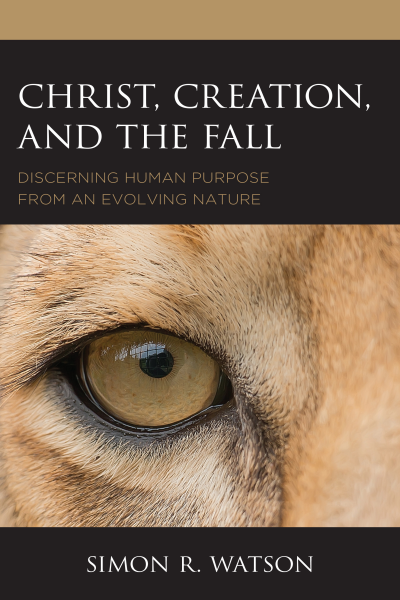
Christ, Creation, and the Fall
Discerning Human Purpose from an Evolving Nature
Authors:
Publisher:
2021
Summary
If the Christian God is creator of all things and revealed in Christ to be compassionate love, then how can divine agency in creation be understood considering the Darwinian assertion that biological warfare undergirds natural selection? The implications are significant for understanding Christian discipleship and ethics if indeed the human is made in God’s image with the capacity for creative or destructive “dominion” over earthly life (Gen. 1:26). To approach this challenge, Simon R. Watson turns to Philip Hefner’s The Human Factor (1993), which identifies the human as created co-creator to investigate themes of freedom and determinism in light of Darwinian evolutionary theory. Hefner’s argument exploring human purpose from a beneficence discernible in creation invites a re-examination of Victorian preoccupations with natural teleology. Inspired by Hefner’s work, Watson places Darwin’s The Descent of Man (1871) in conversation with historical and contemporary sources, from William Paley’s Natural Theology (1802) to twenty-first century articulations of Wisdom Christology by Denis Edwards and Elizabeth Johnson, to argue that theology can offer a framework of meaning to interpret an evolving nature as revelatory of a Christian God when considered through the lens of a suffering Christ and an existentially fallen creation.
Keywords
Search publication
Bibliographic data
Edition
1/2021
Copyright Year
2021
ISBN-Print
978-1-9787-1092-4
ISBN-Online
978-1-9787-1093-1
Publisher
Lexington, Lanham
Language
English
Pages
156
Product Type
Monograph
Table of contents
ChapterPages
Contents No access
Acknowledgments No access
Introduction No access
Introduction No access
An Ethics of the Cross and a Suffering Creation No access
Paley’s Natural Theology as Theologia Gloriae No access
The Argument Cumulative No access
Evidence and the Emerging Awareness of Inference and Interpretation No access
Paley’s Natural Theology as Theologia Crucis No access
The “Newtonian Synthesis” as Anglican Apologetic No access
Reason and Revelation in Creation No access
Conclusion No access
Notes No access
Introduction No access
Darwin and the Natural History of the Moral Sense or Conscience No access
Darwin’s Hope and Faith in Progress No access
Darwin’s Theory as a Call for Social Justice No access
Natural Selection and the Question of Human Freedom No access
A Wider Teleology and the Emergence of the Human as “word of the Word” No access
Asa Gray on Natural Selection and Divine Design No access
Aubrey Moore on the Facts of Nature as the Acts of God No access
Conclusion No access
Notes No access
Introduction No access
Sacrificial Love and Natural Selection No access
Feminist Criticism of Sacrificial Motif No access
Irenaean Type of Theodicy: John H. Hick No access
Natural Selection as Insurmountable Challenge? No access
The Value of a Figurative and Existential Fall No access
Conclusion No access
Notes No access
Introduction No access
Sophia as Emancipatory God-Language for Women and Nature No access
Wisdom Christology as Ecological Theology No access
Deification of the Flesh No access
Divine Immanence as Trinitarian Love of Mutual Relations No access
Creaturely Participation in Sophia’s Goodness, Being, and Agency No access
Evolution as the Autonomous “Self-transcendence” of Creation No access
Limitations of “Free Process Defence” with Thomistic Notion of Participation No access
“New Earth” as Realization or Interruption of Natural Law No access
Conclusion No access
Notes No access
Notes No access
Bibliography No access Pages 137 - 144
Index No access Pages 145 - 154
About the Author No access Pages 155 - 156
Similar publications
from the topics "Religion und Theologie allgemein"
Edited Book No access
Jan Hermelink, Alexander Deeg, Michael Domsgen, Kristin Merle, Marcell Saß