, to see if you have full access to this publication.
Monograph No access
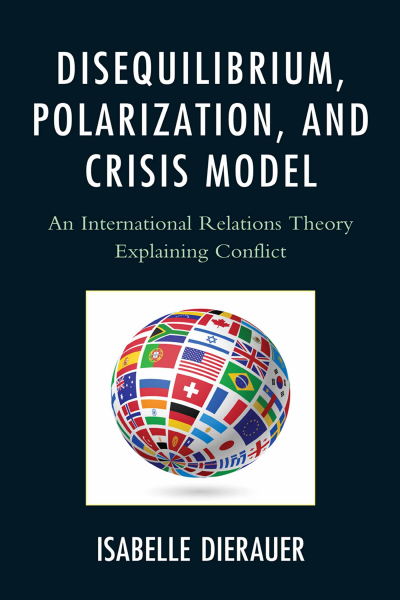
Disequilibrium, Polarization, and Crisis Model
An International Relations Theory Explaining Conflict
Authors:
Publisher:
2013
Summary
Different international relations theorists have studied political change, but all fall short of sufficiently integrating human reactions, feelings, and responses to change in their theories. This book adds a social psychological component to the analysis of why nations, politically organized groups, or states enter into armed conflict. The Disequilibrium, Polarization, and Crisis Model is introduced, which draws from prospect theory, realism, liberalism, and constructivism. The theory considers how humans react and respond to change in their social, political, and economic environment. Three case studies, the U.S. Civil War, the Yugoslav Wars (1991-1995), and the First World War are applied to illustrate the model’s six process stages: status quo, change creating shifts that lead to disequilibrium, realization of loss, hanging on to the old status quo, emergence of a rigid system, and risky decisions leading to violence and war.
Keywords
Search publication
Bibliographic data
Edition
1/2013
Copyright Year
2013
ISBN-Print
978-0-7618-6105-8
ISBN-Online
978-0-7618-6106-5
Publisher
Hamilton Books, Lanham
Language
English
Pages
269
Product Type
Monograph
Table of contents
ChapterPages
Contents No access
Preface No access
Acknowledgements No access
Chapter 1 Introduction No access Pages 1 - 18
Chapter 2 Research Design and Methodology No access Pages 19 - 24
Chapter 3 Literature Review No access Pages 25 - 62
Chapter 4 Disequilibrium, Polarization and Crisis Model No access Pages 63 - 72
Chapter 5 Case Studies of Internal Conflicts No access Pages 73 - 143
Chapter 6 Case Study of Systemic War No access Pages 144 - 223
Chapter 7 Findings and Discussion No access Pages 224 - 252