, to see if you have full access to this publication.
Edited Book No access
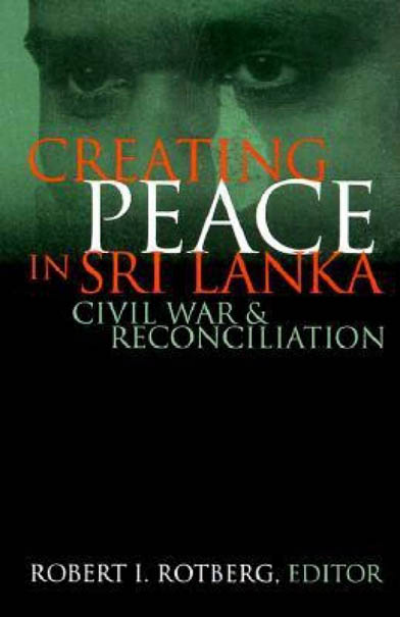
Creating Peace in Sri Lanka
Civil War and Reconciliation
Editors:
Publisher:
2010
Summary
Sri Lanka, one of the most promising states in Asia following independence in 1948, has been torn apart for the past fifteen years by a vicious civil war. The majority Sinhala and minority Tamils have killed each other with increasing ferocity. The Tamils, who are primarily Hindu, fear losing their identity and being overwhelmed by the majority, who are Buddhist. The Sinhala, in turn, fear that the Tamils, with the backing of their ethnic kin in the Indian province of Tamil Nadu, will destabilize and take over control of the Sri Lankan government. Colonial-era rivalries and deep-rooted distrust fuel the tensions. What will bring about an end to this destructive conflict, and how will the island nation heal its physical and psychic wounds following a peace? How will a sustainable peace be arranged? Can mediation help? This book of essays by Sri Lankan and Western authors examines the causes of war and the possibilities for peace. Contributors are Chandra R. de Silva, Old Dominion University; Rohan Edrisinha, University of Colombo; Saman Kelegama, Institute of Policy Studies of Sri Lanka; David Little, United States Institute of Peace; Darini Rajasingham-Senanayake, Columbia University; Teresita C. Schaffer, former U.S. Ambassador to Sri Lanka; David Scott, Johns Hopkins University; Donald R. Snodgrass, Harvard Institute for International Development; Jayadeva Uyangoda, Sri Lanka Foundation; William Weisberg and Donna Hicks, Harvard University. A World Peace Foundation Book
Search publication
Bibliographic data
Edition
1/2010
Copyright Year
2010
ISBN-Print
978-0-8157-7578-2
ISBN-Online
978-0-8157-1349-4
Publisher
Rowman & Littlefield, Lanham
Language
English
Pages
218
Product Type
Edited Book
Table of contents
ChapterPages
Contents No access
Acknowledgments No access
1. Sri Lanka's Civil War: From Mayhem toward Diplomatic Resolution No access Pages 1 - 16
2. South Asia's Enduring War No access Pages 17 - 40
3. Religion and Ethnicity in the Sri Lankan Civil War No access Pages 41 - 56
4. The Dangers of Devolution: The Hidden Economies of Armed Conflict No access Pages 57 - 70
5. Economic Costs of Conflict in Sri Lanka No access Pages 71 - 88
6. The Economic Development of Sri Lanka: A Tale of Missed Opportunities No access Pages 89 - 108
7. The Role of Education in Ameliorating Political Violence in Sri Lanka No access Pages 109 - 130
8. Peacemaking in Sri Lanka: The Kumaratunga Initiative No access Pages 131 - 142
9. Overcoming Obstacles to Peace: An Examination of Third-Party Processes No access Pages 143 - 156
10. A Political Culture of Conflict No access Pages 157 - 168
11. Constitutionalism, Pluralism, and Ethnic Conflict: The Need for a New Initiative No access Pages 169 - 188
12. Devolution and the Elusive Quest for Peace in Sri Lanka No access Pages 189 - 202
Contributors No access Pages 203 - 206
About the Sponsoring Institutions No access Pages 207 - 210