, to see if you have full access to this publication.
Monograph No access
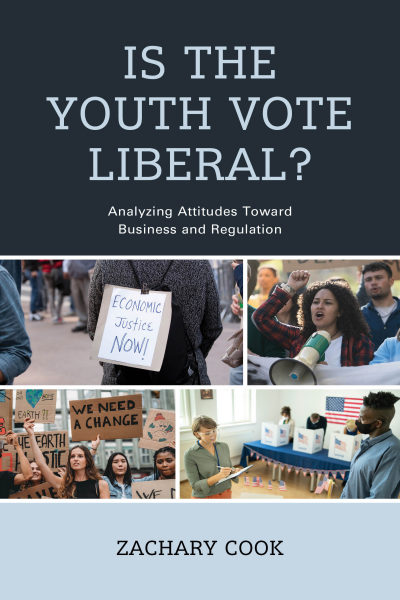
Is the Youth Vote Liberal?
Analyzing Attitudes Toward Business and Regulation
Authors:
Publisher:
2024
Summary
Young Americans are not reliable liberals. But drawing from over one hundred surveys from the present day back to the Great Depression, and from interviews with campaign professionals from the Barack Obama and Bernie Sanders campaigns, Zachary Cook argues that across the twentieth and twenty-first centuries, younger Americans have more faith in the power of government to provide better economic outcomes for all, and to effectively regulate business – if the right politicians can be found to do it. While older voters grow more skeptical about the federal government’s power to oversee the private sector, youth are more idealistic about the power of government to “do more,” even while they may distrust current politicians in office. Younger voters are not hostile to capitalism. They do not feel they have to choose sides between big government and big business. Given the current two-party system, this potential trust in the power of government works in the Democrats’ favor when appealing to the youth vote.
Search publication
Bibliographic data
Edition
1/2024
Copyright Year
2024
ISBN-Print
978-1-66692-570-8
ISBN-Online
978-1-6669-2571-5
Publisher
Lexington, Lanham
Language
English
Pages
230
Product Type
Monograph
Table of contents
ChapterPages
Contents No access
Acknowledgments No access
The Essentials of Youth Limited Liberalism No access
What about Cultural Liberalism? No access
Structure of Book No access
Notes No access
Why No Generations? No access
What Is a Life-Cycle Effect? No access
What Is Limited Liberalism? No access
Why Limited Liberalism Is Narrower than Economic Liberalism No access
Is This All Really Trust in Government? No access
The Education of Walter Lippmann No access
Who Counts as Young? No access
Notes No access
The Many Challenges of Cohort Effects No access
The Challenges of Estimating Life-Cycle Effects No access
Controlling for Omitted Variables and Mortality Effects No access
What about Mortality Bias? No access
The Limits of Youth Liberalism No access
Chapter 3 Appendix No access
Notes No access
Methodology and Case Selection No access
Findings from the 1937 to 1938 Era No access
The 1951–1952 Election No access
Life-Cycle Effects and Conservatism No access
Notes No access
The Meaning of Partisan Identification No access
Why Reagan is a Good Case Example No access
Limited Liberalism and Democratic Candidate Choice No access
What about Race and Ethnicity? No access
Notes No access
Previous Scholarship on Younger Voters and Charismatic Democrats No access
Interview Methodology No access
Personal Candidate Traits: Style, Coolness, Race, Inspiration, Authenticity No access
Conclusion No access
Note No access
The Youth Vote for President: Still Democratic No access
Limited Liberalism and the Two-Party System No access