, to see if you have full access to this publication.
Monograph No access
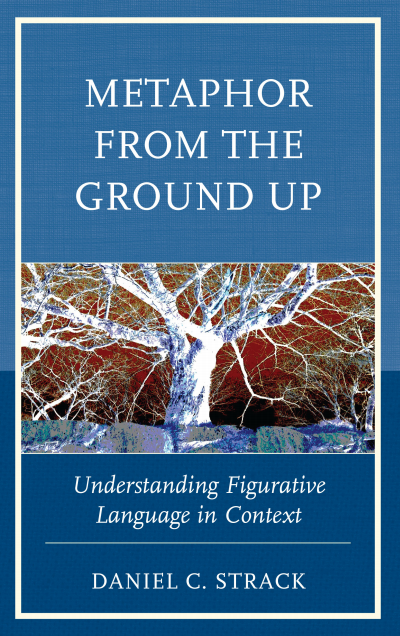
Metaphor from the Ground Up
Understanding Figurative Language in Context
Authors:
Publisher:
2019
Summary
Metaphor from the Ground Up introduces Conceptual Filtering Theory, a theory of mental processing that describes figurative language communication in terms of conceptual domain projection and contextual disambiguation. In an attempt to match theoretical observations from cognitive semantics and pragmatics with related knowledge about mental processes from cognitive neuroscience, CFT first examines the distributed nature of conceptualization and then uses this background information to explain metonymic “binding” and metaphoric “mapping.” Once the perceptual origins of metonymy and metaphor have been demonstrated, CFT offers a detailed account of how salient aspects of conceptualization differentially combine to achieve predictable inferencing results in linguistic communication. In addition, CFT characterizes the role of contextual effects in pruning salient inferencing options and demonstrates how situational frames can be manipulated to guide semantic outcomes. The book as a whole will assert that figurative language processing cannot be characterized in terms of a generically constituted base system that receives inputs and spits out predictable results according to logical probability in a situational vacuum. Rather, it is a dynamic, context-sensitive process that continually reweights the underlying system so as to rapidly select situation-relevant lines of inferencing from among a variety of salient inferencing options.
Search publication
Bibliographic data
Edition
1/2019
Copyright Year
2019
ISBN-Print
978-1-4985-4790-1
ISBN-Online
978-1-4985-4791-8
Publisher
Lexington, Lanham
Language
English
Pages
188
Product Type
Monograph
Table of contents
ChapterPages
Contents No access
Acknowledgments No access
Introduction: Metaphor Theory at an Impasse No access Pages 1 - 8
Chapter One: Metaphor Is Grounded in Sense Perception No access Pages 9 - 30
Chapter Two: Metonymic Binding and Conceptualization No access Pages 31 - 50
Chapter Three: The Challenge of Feature Attribution No access Pages 51 - 70
Chapter Four: Conceptual Filtering No access Pages 71 - 92
Chapter Five: Context and Goal Orientation No access Pages 93 - 114
Chapter Six: Metonymic Cues and Narrative Framing No access Pages 115 - 134
Chapter Seven: Metaphor Productivity and Dual-mode Instantiation No access Pages 135 - 154
Conclusion: Invariance and Beyond No access Pages 155 - 164