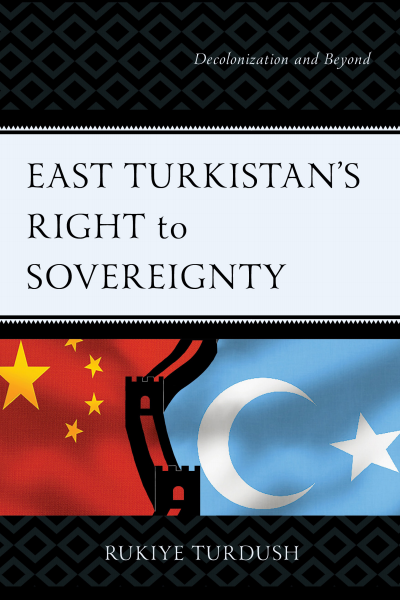
East Turkistan's Right to Sovereignty
Decolonization and Beyond- Authors:
- Publisher:
- 2022
Summary
This study examines the relationship between the People’s Republic of China and the people of East Turkistan; specifically, between China’s settler colonialism and East Turkistan’s independence movement. What distinguishes this study is its dispassionate analysis of the East Turkistan’s national dilemma in terms of international law and legal precedent as well as the prudence with which it distinguishes substantial evidence from claims of China’s crimes against humanity and genocide in East Turkistan that have not been fully verified yet.
The author demonstrates how other states have ignored the nature of that relationship and so avoided asking key questions about East Turkistan that have been asked and answered about other occupied and colonized states. The book analyzes this situation and provides the tools and the argument to understand East Turkistan’s actual status in the international community. Currently, the world has bought into China’s rhetoric about “stability” and “fighting extremism,” and international organizations accept China’s presentation of Uyghurs and other people as “minorities” within a Chinese nation-state. This book instead shows East Turkistan can correctly be understood through history and law as an illegally occupied territory undergoing genocide. It also makes the case that East Turkistani people had basis advancing territorial claim for independence.
Keywords
Search publication
Bibliographic data
- Edition
- 1/2022
- Copyright Year
- 2022
- ISBN-Print
- 978-1-6669-2726-9
- ISBN-Online
- 978-1-6669-2727-6
- Publisher
- Lexington, Lanham
- Language
- English
- Pages
- 200
- Product Type
- Monograph
Table of contents
- Contents No access
- Acknowledgments No access
- East Turkistan No access
- Relationship between China and East Turkistan No access
- Chapter Outline No access
- Notes No access
- The Principle of Self-Determination No access
- Defining the People and Territory of East Turkistan No access
- Colonial History of East Turkistan No access
- Notes No access
- East Turkistan’s Statehood Before China’s Invasion (1877–1933) No access
- Declaration of Independence No access
- Government Structure No access
- The East Turkistan Republic Represents the Whole Territory and People of East Turkistan No access
- Relations with the East Turkistan Republic and Other States No access
- China’s Illegal Sovereignty Over East Turkistan No access
- Notes No access
- Peaceful Liberation or Armed Invasion? No access
- Is It Lawful for China to Reject East Turkistan’s Peaceful Demand for Independence? No access
- Who Is Breaching International Peace? No access
- Should China Have the Legal Title Over East Turkistan? No access
- Summary No access
- Notes No access
- Criminalization of Uyghurs: Precondition of Genocide No access
- Annexation, Colonization, and Early Nation-Building No access
- Special Intent: Derogatory Words No access
- Summary No access
- Notes No access
- Killings during the Uyghur Protests No access
- Killings in Concentration Camps No access
- Mass Killings No access
- Killings through Organ Harvesting No access
- Detention and Death Sentences for Uyghur Scholars No access
- Violations of Article II(b): Serious Bodily or Mental Harm No access
- Uyghur Children Are Not Allowed to Speak Their Language or Practice Their Culture and Religion and Face Severe Consequences If They Do So No access
- Uyghur Children Are Not Only Removed from Their Families But Also from Their Communities and Culture No access
- Uyghur Youth Experience Mental and Physical Abuse in the Camps No access
- Uyghur Children Are Not Allowed to Travel Out of China to Unite with Their Parents. No access
- Intentional Removal of the Younger Generation No access
- Potential Consequences of Child Separation No access
- Prevention of Birth No access
- “Forced Marriage” Policy No access
- Violations of Article II(c) and (d): Forced Labor and Deportation No access
- Deportation to Secret Locations No access
- Cultural Genocide Is Clear Evidence for Intention of Genocide No access
- Summary No access
- Notes No access
- The Xinjiang Production and Construction Corps No access
- The Chinese Settlers No access
- Exploitation of Natural Resources and Economic Segregation No access
- Summary No access
- Notes No access
- Independence Movements No access
- Uyghurs Protest in Ghulja No access
- Protest in Urumchi No access
- Ilham Tohti’s Ideology No access
- Political Activities of Exiled Uyghurs No access
- Summary No access
- Notes No access
- Artificial Autonomy No access
- Oppressive Rule No access
- Self-government in Local Affairs: Religion, Education, and Culture No access
- Summary No access
- Notes No access
- Legal Dimensions No access
- Internal Context No access
- China’s New Silk Road Project: Ambition of Controlling the World No access
- Strategic Location and Geopolitics No access
- China’s Veto Power and East Turkistan’s Sovereignty No access
- Summary No access
- Notes No access
- Article One No access
- Article Two No access
- Article Three No access
- Article Four No access
- Article 5: Establishment of Governmental Departments No access
- Article 6: Responsibilities of the President No access
- Article 7: Responsibilities of the Prime Minister No access
- Article 8. Executive Departments No access
- Article 9. Responsibilities of National Defense No access
- Article 10. Ministry of Foreign Affairs No access
- Article 11. Ministry of Internal Affairs No access
- Article 12. Ministry of Endowments and Foundations (Waqfs) No access
- Cultural and Social Cabinet No access
- Article 13. Ministry of Finance No access
- Article 14. Ministry of Trade and Agriculture No access
- Article 15. Ministry of Education No access
- Article 16. Ministry of Health No access
- Article 17. Establishing Provinces No access
- Article 18. Governors of Provinces No access
- Article 19. Establishing Courts No access
- Article 20. No access
- Article 21 No access
- Article 22 No access
- Article 23: Establishing Counties No access
- Article 24 No access
- Article 25 No access
- Article 26 No access
- Article 27 No access
- Article 28: Establishing Villages No access
- Article 29 No access
- Article 30. Inspector General No access
- Archival Sources No access
- Government Records No access
- Secondary Sources No access
- Audio-Visual and Social Media Sources No access
- Reference Works No access
- Interviews No access
- Index No access Pages 191 - 198
- About the Author No access Pages 199 - 200