, to see if you have full access to this publication.
Monograph No access
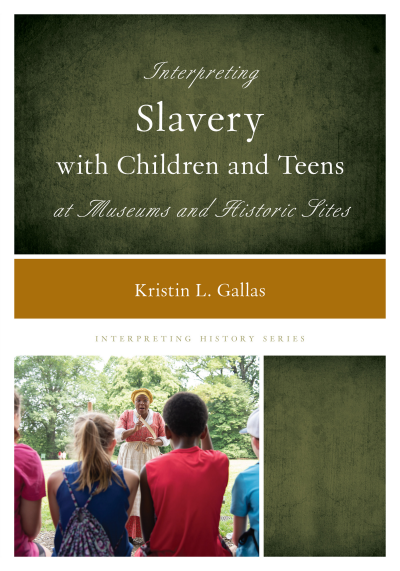
Interpreting Slavery with Children and Teens at Museums and Historic Sites
Authors:
Publisher:
2021
Summary
Interpreting Slavery with Children and Teens offers advice, examples, and replicable practices for the comprehensive development and implementation of slavery-related school and family programs at museums and historic sites. Developing successful experiences—school programs, field trips, family tours—about slavery is more than just historical research and some hands-on activities. Interpreting the history of slavery often requires offering students new historical narratives and helping them to navigate the emotions that arise when new narratives conflict with longstanding beliefs. We must talk with young people about slavery and race, as it is not enough to just talk to them or about the subject. By engaging students in dialogue about slavery and race, they bring their prior knowledge, scaffold new knowledge, and create their own relevance—all while adults hear them and show respect for what they have to say.
The book’s framework aims to move the field forward in its collective conversation about the interpretation of slavery with young audiences, acknowledging the criticism of the past and acting in the present to develop inclusive interpretation of slavery. When an organization commits to doing school and family programs on the topic of slavery, it makes a promise to past and future generations to keep alive the memory of long-silenced millions and to raise awareness of the racist legacies of slavery in our society today.
Keywords
Search publication
Bibliographic data
Edition
1/2021
Copyright Year
2021
ISBN-Print
978-1-5381-0069-1
ISBN-Online
978-1-5381-0071-4
Publisher
Rowman & Littlefield, Lanham
Language
English
Pages
136
Product Type
Monograph
Table of contents
ChapterPages
Contents No access
Foreword No access
Acknowledgments No access
Preface No access
1: Race, Identity, and Historical Trauma No access Pages 1 - 12
2: (Re)Defining a Successful Experience No access Pages 13 - 26
3: Creating a Brave Space No access Pages 27 - 38
4: What Is Age Appropriate? No access Pages 39 - 54
5: Fostering Empathy No access Pages 55 - 68
6: Engagement Techniques No access Pages 69 - 86
7: Dialogue Techniques No access Pages 87 - 96
8: Staff Training and Support No access Pages 97 - 116