, to see if you have full access to this publication.
Monograph No access
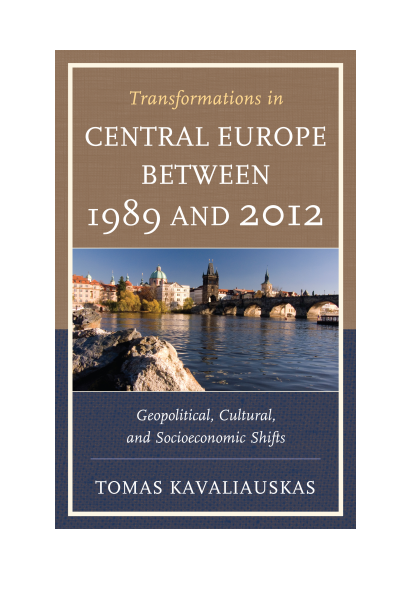
Transformations in Central Europe Between 1989 And 2012
Geopolitical, Cultural, and Socioeconomic Shifts
Authors:
Publisher:
2012
Summary
Transformations in Central Europe between 1989 and 2012: Geopolitical, Cultural, and Socioeconomic Shifts by Tomas Kavaliauskas, is an in-depth study of the transformations in Central Europe in the years since the fall of Communism. Using a comparative analysis of geopolitical, ethical, cultural, and socioeconomic shifts, this essential text investigates postcommunist countries including Estonia, Latvia, Lithuania, Poland, the Czech Republic, Slovakia, Hungary, Romania, Bulgaria, and Slovenia.
Next to transitological interpretations, this study ventures upon negative and positive freedom (Isaiah Berlin) in Central Europe after two decades of post-communist transition. Kavaliauskas questions the meaning of completeness of postcommunist transition, both geopolitical and socioeconomic, when there are many transformations that do not necessarily mean unequivocal progress. The author also analyses why Central Europe in 1989, armed with civil disobedience, could not maintain its moral politics. But the book touches sensitive issues of memory as well: an examination of May 9th is provided from the Russian and the Baltic perspectives, revealing two opposing world views regarding this date of liberation or occupation. Finally, Kavaliauskas analyzes the tragedy at Smolensk airport, which became an inseparable part of Central European identity. Transformations in Central Europe between 1989 and 2012 is an essential contribution to the literature on Central Europe and the lasting effects of Communism and its aftermath.
Keywords
Search publication
Bibliographic data
Edition
1/2012
Copyright Year
2012
ISBN-Print
978-0-7391-7410-4
ISBN-Online
978-0-7391-7411-1
Publisher
Lexington, Lanham
Language
English
Pages
208
Product Type
Monograph
Table of contents
ChapterPages
Contents No access
Acknowledgments No access
Foreword No access
Introduction No access
1 Defining Central Europe as a Postcommunist Region No access Pages 1 - 10
2 Positive and Negative Freedom in Central Europe before and after 1989 No access Pages 11 - 22
3 Virtual and Real Freedom in Central Europe after 1989 No access Pages 23 - 50
4 The Complete and Incomplete Transition in Central Europe No access Pages 51 - 74
5 Fluctuating Socioeconomics and Postsocialist Inverted Morals No access Pages 75 - 98
6 The Salvation of the Two Europes in 1968 from the Perspective of 1989 No access Pages 99 - 108
7 Vilnius 10 Group—Geopolitical Emancipation or a Lost Opportunity for Angelic Moral Politics? No access Pages 109 - 122
8 The Demiurge of the EU and Central Europe No access Pages 123 - 136
9 Different Meanings Applied to May 9th Victory Day in WWII No access Pages 137 - 156
10 Social and Political Meaning of Light in Central Europe before and after 1989 No access Pages 157 - 166
11 Communist Nostalgia as Extrapolation of the Past into the Present No access Pages 167 - 176
12 Katyń Does Not Happen Twice No access Pages 177 - 192