, to see if you have full access to this publication.
Monograph No access
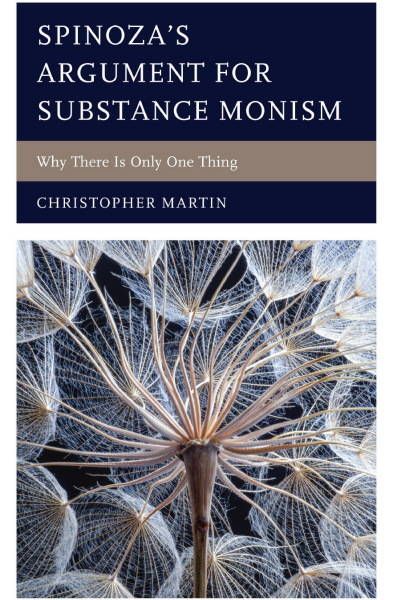
Spinoza’s Argument for Substance Monism
Why There Is Only One Thing
Authors:
Publisher:
2023
Summary
In Spinoza’s Argument for Substance Monism: Why There Is Only One Thing, Christopher Martin provides an interpretation and defense of this argument, using speculative metaphysics as a method to show how the key terms and concepts are employed and fit together. Specifically, Martin argues that (i) Spinoza’s understanding of substance and attribute departs only slightly from dominant historic notions; (ii) his definition of God in terms of attributes instead of perfections is quite helpful and (mostly) compatible with more traditional definitions; and (iii) Spinoza’s pairing of causal and conceptual relations is more intuitive than we think. Martin also shows how these essences function as causes and explains why, with Spinoza’s understanding of emanation and conceptual independence, any substance must have every attribute. These features of Spinoza’s argument explain and defend his ultimate claim that God/Nature is the only substantial being in existence. This book demonstrates how approachable and compelling Spinoza’s argument is and illustrates the practice and potential of speculative metaphysics for specialists and non-specialists alike.
Keywords
Search publication
Bibliographic data
Edition
1/2023
Copyright Year
2023
ISBN-Print
978-1-6669-2714-6
ISBN-Online
978-1-6669-2715-3
Publisher
Lexington, Lanham
Language
English
Pages
126
Product Type
Monograph
Table of contents
ChapterPages
Contents No access
Acknowledgments No access
Introduction No access Pages 1 - 10
Spinoza’s Speculative Metaphysics No access Pages 11 - 28
Substance, Attributes, and Modes No access Pages 29 - 44
Why God Must Exist No access Pages 45 - 64
Spinoza’s Argument for Monism No access Pages 65 - 80
Conceptual Independence and Emanation to the Rescue No access Pages 81 - 100
Modes and the World That Follows from God No access Pages 101 - 116