, to see if you have full access to this publication.
Monograph No access
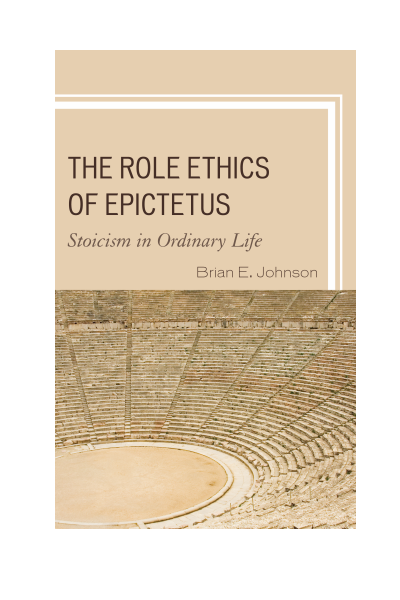
The Role Ethics of Epictetus
Stoicism in Ordinary Life
Authors:
Publisher:
2013
Summary
The Role Ethics of Epictetus: Stoicism in Ordinary Life offers an original interpretation of Epictetus’s ethics and how he bases his ethics on an appeal to our roles in life. Epictetus believes that every individual is the bearer of many roles from sibling to citizen and that individuals are morally good if they fulfill the obligations associated with these roles. To understand Epictetus’s account of roles, scholars have often mistakenly looked backwards to Cicero’s earlier and more schematic account of roles. However, for Cicero, roles are merely a tool in the service of the virtue of decorum where decorum is one of the four canonical virtues—prudence, justice, greatness of spirit, and decorum. In contrast, Epictetus sets those virtues aside and offers roles as a complete ethical theory that does the work of those canonical virtues.
This book elucidates the unique features of Epictetus’s role based ethics. First, individuals have many roles and these roles are substantial enough that they may conflict. Second, although Epictetus is often taken to have only a sparse theory of appropriate action (or “duty” in older translations), Brian E. Johnson examines the criteria by which appropriate action is measured in order to demonstrate that Epictetus does have an account of appropriate action and that it is grounded in his account of roles. Finally, Epictetus downplays the Stoic ideal of the sage and replaces that figure with role-bound individuals who are supposed to inspire each of us to meet the challenges of our own roles. Instead of looking to sages, who have a perfect knowledge and action that we must imitate, Epictetus’s new ethical heroes are those we do not imitate in terms of knowledge or action, but simply in the way they approach the challenges of their roles.
The analysis found in The Role Ethics of Epictetus will be of great value both to students and scholars of ancient philosophy, ethics and moral philosophy, history, classics, and theology, and to the educated reader who admires Epictetus.
Keywords
Search publication
Bibliographic data
Edition
1/2013
Copyright Year
2013
ISBN-Print
978-0-7391-7967-3
ISBN-Online
978-0-7391-7968-0
Publisher
Lexington, Lanham
Language
English
Pages
200
Product Type
Monograph
Table of contents
ChapterPages
Contents No access
Preface No access
Acknowledgments No access
Introduction No access Pages 1 - 10
1 Epictetus’s Role for Human Beings No access Pages 11 - 24
2 Bearing Many Roles: Specific Roles in an Individual’s Life No access Pages 25 - 42
3 Roles in Action: Appropriate Acts (or “Duties”) No access Pages 43 - 62
4 Education and the Good of Epictetean Roles No access Pages 63 - 84
5 The Cases of Socrates and Heracles: Role Conflict and Identity No access Pages 85 - 104
6 The Role of Roles in Epictetus’s Discourses 1.2: Three Interpretations No access Pages 105 - 122
7 Resolving Role Conflicts No access Pages 123 - 134
8 Cicero’s Account of Panaetius’s Four Personae: A Theory of Decorum No access Pages 135 - 172
9 Epictetus’s Role Ethics: The Unfolding Script No access Pages 173 - 186