, to see if you have full access to this publication.
Monograph No access
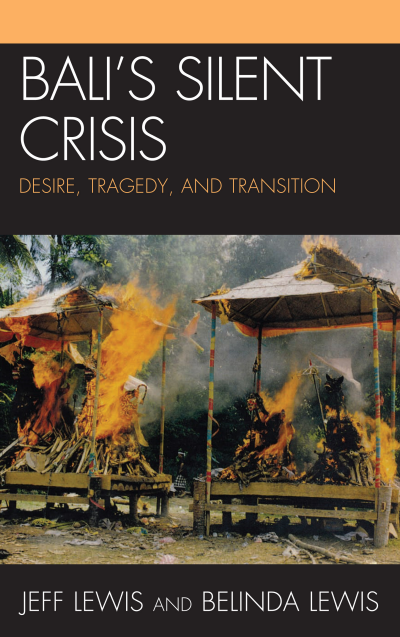
Bali's Silent Crisis
desire, tragedy, and transition
Authors:
|
Publisher:
2009
Summary
Bali and Balinese culture have become central to western imaginings of 'the east.' Along with its natural beauty and tropical sensuality, Bali's rich and complex culture has proved intensely alluring for western artists, scholars, and travelers. However, as this aesthetic imagining and desire for beauty have evolved into a mass tourism industry, the island people and their culture have experienced radical and rapid transformation. While many in the international community were stunned by the horror of the militant bombings in 2002 and 2005, these attacks were merely the apex of a profound and ongoing crisis which resonates through the period of Bali's modernization and engagement with the global economy of pleasure. Bali's Silent Crisis examines and elucidates the complex cultural and political environment of contemporary Bali. The book explains the conditions of crisis in Bali in terms of a powerful collision of cultural elements and trends, focusing specifically on the double matrix of 'desire' and 'violence' that has characterized Bali's recent past. Moving beyond a simple opposition between 'tradition' and 'the modern', this book reveals a society that is struggling to reconcile its own profound aesthetic and sense of historical identity with the intense agonisms that are generated through rapid social and cultural change. Through its thematic approach, Bali's Silent Crisis presents an image of community trauma, creative resilience and pluralization. The book records the challenges and horrors associated with transition, as well as the formidable beauty that remains intrinsic to the island's sense of cultural destiny.
Search publication
Bibliographic data
Edition
1/2009
Copyright Year
2009
ISBN-Print
978-0-7391-2820-6
ISBN-Online
978-0-7391-3243-2
Publisher
Lexington, Lanham
Language
English
Pages
242
Product Type
Monograph
Table of contents
ChapterPages
Contents No access
Illustrations and Tables No access
Acknowledgments No access
Introduction No access Pages 1 - 10
Chapter 1. Temple of Doom: Shadows in the New Bali No access Pages 11 - 42
Chapter 2. Development and Destruction: The Consequences of Change No access Pages 43 - 78
Chapter 3. Bodies in Motion: Love and Desire in Contemporary Bali No access Pages 79 - 136
Chapter 4. In the State of Transition: Civil Society, Corruption, and the New Risk Culture No access Pages 137 - 182
Chapter 5. Terror, Territory, and God: The Cataclysm of Violence No access Pages 183 - 226
Conclusion: Visions of the Eternal Spirit No access Pages 227 - 234