, to see if you have full access to this publication.
Edited Book No access
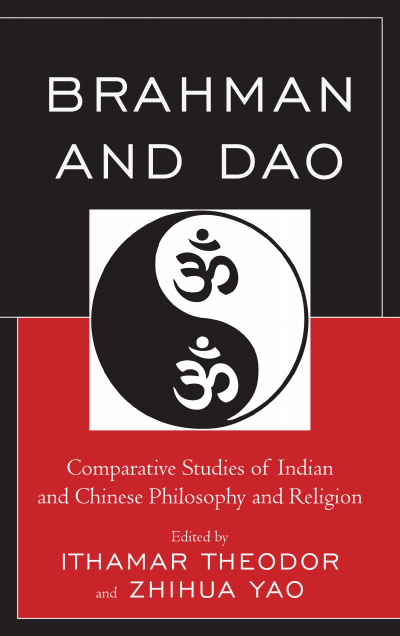
Brahman and Dao
Comparative Studies of Indian and Chinese Philosophy and Religion
Editors:
|
Publisher:
2013
Summary
The present geopolitical rise of India and China evokes much interest in the comparative study of these two ancient Asian cultures. There are various studies comparing Western and Indian philosophies and religions, and there are similar works comparing Chinese and Western philosophy and religion. However, so far there is no systemic comparative study of Chinese and Indian philosophies and religions. Therefore there is a need to fill this gap. As such, Brahman and Dao: Comparative Studies of Indian and Chinese Philosophy and Religion is a pioneering volume in that it highlights possible bridges between these two great cultures and complex systems of thought, with seventeen chapters on various Indo-Chinese comparative topics. The book focuses on four themes: metaphysics and soteriology; ethics; body, health and spirituality; and language and culture.
Keywords
Search publication
Bibliographic data
Edition
1/2013
Copyright Year
2013
ISBN-Print
978-0-7391-7172-1
ISBN-Online
978-0-7391-8814-9
Publisher
Lexington, Lanham
Language
English
Pages
292
Product Type
Edited Book
Table of contents
ChapterPages
Contents No access
Acknowledgments No access
Introduction No access
Chapter 1. One, Water, and Cosmogony: Reflections on the Ṛgveda X.129 and the Taiyi sheng shui No access
Chapter 2. Exploring Parallels between the Philosophy of Upaniṣads and Daoism No access
Chapter 3. The Way of Silent Realization: Ineffability and Rationality in the Philosophical Mysticisms of Śaṅkara and Zhan Ruoshui No access
Chapter 4. Impermanence and Immortality: The Concept of pañca-skandha in Buddhism and in Twofold Mystery Daoism No access
Chapter 5. Li and Dharma: Gandhi, Confucius, and Virtue Aesthetics No access
Chapter 6. Ethics and Metaphysics in the Bhagavadgītā and Classical Chinese Thought No access
Chapter 7. Communal Moral Personhood and Moral Responsibility in the Analectsand the Bhagavadgītā No access
Chapter 8. Ethics of Compassion: Buddhist Karuṇā and Confucian Ren No access
Chapter 9. Why “Besire” Is Not Bizarre: Moral Knowledge in Confucianism and Hinduism No access
Chapter 10. Yoga and Daoyin: History, Worldview, and Techniques No access
Chapter 11. The Emergence of Classical Medicine in Ancient China and India No access
Chapter 12. Health, Illness, and the Body in Buddhist and Daoist Self-Cultivation No access
Chapter 13. Indic Influence on Chinese Language No access
Chapter 14. Magical Alphabet in the Indian and Chinese Minds: From the Garland of Letters to Master Pu’an’s Siddham Mantra No access
Chapter 15. Mixed up on “Matching Terms” (geyi): Confusions in Cross-Cultural Translation No access
Chapter 16. The Ludic Quality of Life: A Comparison of the Caitanaya-caritāmṛta and the Zhuangzi No access
Chapter 17. The Poet and the Historian: Criticism of the Modern Age by Rabindranath Tagore and Qian Mu No access