, to see if you have full access to this publication.
Edited Book No access
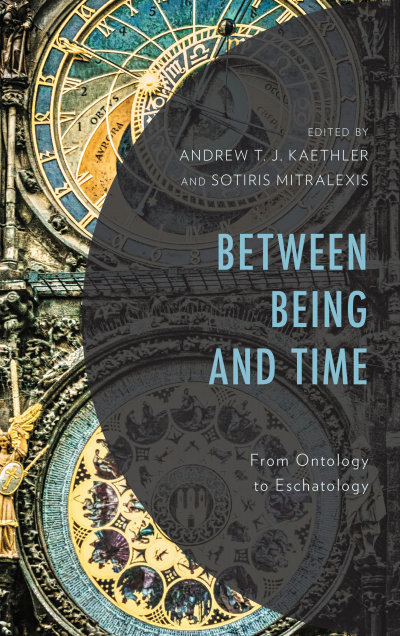
Between Being and Time
From Ontology to Eschatology
Editors:
|
Publisher:
2019
Summary
This book explores the relationship between being and time —between ontology and history— in the context of both Christian theology and philosophical inquiry. Each chapter tests the limits of this multifaceted thematic vis-à-vis a wide variety of sources: from patristics (Maximus the Confessor, Gregory of Nyssa) to philosophy (Kant, Kierkegaard, Heidegger) to modern theology (Berdyaev, Ratzinger, Fagerberg, Zizioulas, Yannaras, Loudovikos); from incarnation to eschatology; and from liturgy and ecclesiology to political theology. Among other topics, time and eternity, protology and eschatology, personhood and relation, and ontology and responsibility within history form core areas of inquiry. Between Being and Time facilitates an auspicious dialogue between philosophy and theology and, within the latter, between Catholic and Orthodox thought. It will be of considerable interest to scholars of Christian theology and philosophy of religion.
Keywords
Search publication
Bibliographic data
Edition
1/2019
Copyright Year
2019
ISBN-Print
978-1-9787-0180-9
ISBN-Online
978-1-9787-0181-6
Publisher
Lexington, Lanham
Language
English
Pages
302
Product Type
Edited Book
Table of contents
ChapterPages
Contents No access
Acknowledgments No access
Introduction: Feast of the Transfiguration, 2018 No access
Chapter One: Ontology versus Fideism: Christianity’s Accountability to History and Society No access
Chapter Two: Ontology, History, and Relation (Schesis): Gregory of Nyssa’s Epektasis No access
Chapter Three: Syn-odical Ontology: Maximus the Confessor’s Proposition for Ontology within History and in the Eschaton No access
Chapter Four: The Liturgy behind Liturgies: The Church’s Metaphysical Form No access
Chapter Five: The Kantian “Two-Images” Problem, Its Lesson for Christian Eschatology, and the Path of Maximian Analogy No access
Chapter Six: Zizioulas and Heidegger: “Eschatological Ontology” and Hermeneutics No access
Chapter Seven: What Does “Rising from the Dead” Mean?: A Hermeneutics of Resurrection No access
Chapter Eight: Ecstatic or Reciprocal Meaningfulness?: Orthodox Eschatology between Theology, Philosophy, and Psychoanalysis No access
Chapter Nine: The Ontology of the Person—An Outline No access
Chapter Ten: Berdyaev’s Solution to History: Redeeming Persons in Historical Love No access
Chapter Eleven: Joseph Ratzinger’s Imago Dei Anthropology: The Reconciliation of Ontology and Salvation History No access
Chapter Twelve: Praying and Presence: Kierkegaard on Despair and the Prolepsis of the Self No access
Chapter Thirteen: Mapping the Theo-Political: Metaphysical Prolegomenon for Political Theology No access
Chapter Fourteen: The Eucharist Makes the Church Repent: Eucharistic Ecclesiology and Political Theology No access
Chapter Fifteen: How Realistic Are Christian Politics?: A Case for Eschatological Realism No access
Bibliography No access Pages 276 - 291
Index No access Pages 292 - 296
About the Contributors No access Pages 297 - 302
Similar publications
from the topics "Religion und Theologie allgemein"