, to see if you have full access to this publication.
Monograph No access
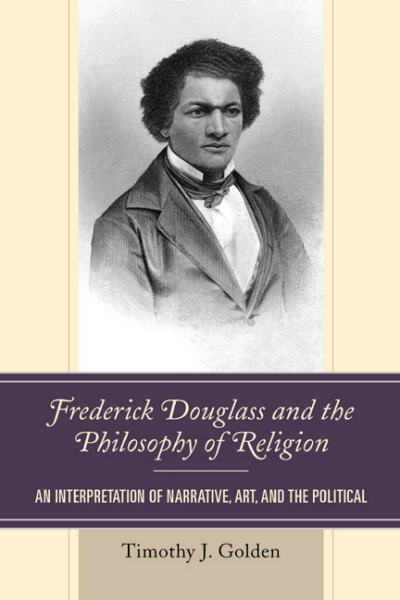
Frederick Douglass and the Philosophy of Religion
An Interpretation of Narrative, Art, and the Political
Authors:
Publisher:
2021
Summary
Frederick Douglass and the Philosophy of Religion: An Interpretation of Narrative, Art, and the Political addresses Douglass’s narrative method and the reformed epistemology of analytic theism within the context of Incarnational theology. Timothy J. Golden argues that in this context, Douglass’s use of narrative maintains a robust moral, social, and political engagement—and thus a closer connection to an authentic Christian theology—in a way that analytic theism does not. To show this contrast, Golden presents existential and phenomenological interpretations of Douglass, reading him alongside Kierkegaard, Kafka, and Levinas. Golden concludes the book with reflection on how Douglass’s Incarnational theology connects to his future philosophical and theological work, which understands consciousness (subjectivity) as saturated in time understood as history. Golden argues that the resulting view of consciousness helps to overcome abstraction in a variety of philosophical subfields, including jurisprudence and gender studies.
Search publication
Bibliographic data
Edition
1/2021
Copyright Year
2021
ISBN-Print
978-0-7391-9167-5
ISBN-Online
978-0-7391-9168-2
Publisher
Lexington, Lanham
Language
English
Pages
258
Product Type
Monograph
Table of contents
ChapterPages
Contents No access
Preface and Acknowledgments No access
Introduction No access Pages 1 - 16
The Word Made Flesh No access Pages 17 - 50
The Truth in Fiction No access Pages 51 - 96
Overcoming Theodicy No access Pages 97 - 130
A Demand for Universality No access Pages 131 - 186
An Ethical Metaphysics of the Flesh No access Pages 187 - 224