, to see if you have full access to this publication.
Monograph No access
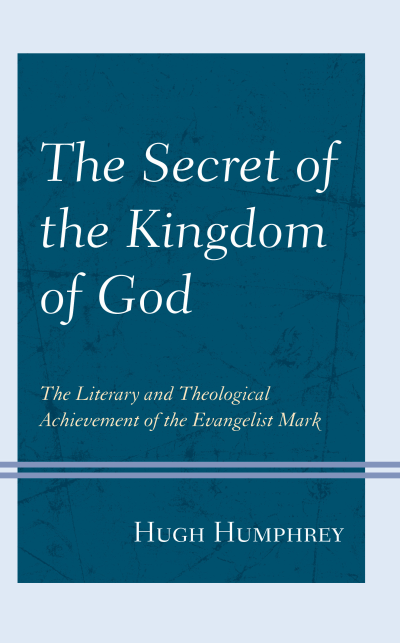
The Secret of the Kingdom of God
The Literary and Theological Achievement of the Evangelist Mark
Authors:
Publisher:
2018
Summary
The Secret of the Kingdom of God argues that the Evangelist Mark should be recognized as much a creative author as any of the other gospel writers. This new approach examines Mark’s text against the available evidence of the literary heritage of first century authors, their education, and the writing practices in the Greco-Roman world. It is also focused on the text of Mark’s gospel as an intelligible whole, created by Mark using literary models well known to him and to his audience. This “new paradigm” accordingly shows another moment in the developing theology of the early Church, i.e. how a story of the life of Jesus can be used to present the significance of the death of Jesus for his later disciples. Mark is clear about his purpose: His first verse indicates that he will narrate the “beginning” of the “gospel” / “good news” (1:1) of Jesus’ resurrection and he announces the imminent “Kingdom of God” in Jesus’ first words (1:15); the “secret” / “mystery” of the Kingdom of God is then said to be disclosed to those who were his disciples (4:11) and to those who would later be his disciples (8:34 – 9:1). That purpose is clear from the very structure of Mark’s composition, where he discloses the secret of the Kingdom of God in his central section (8:27 – 10:45) and frequently shifts from the narration of Jesus’ story to episodes depicting discipleship. Mark’s gospel, then, is written for Christians to emphasize that they are essentially modelling their lives after Jesus’ life and death and that Jesus’ surrendering of himself to God’s will for him led to Jesus’ resurrection and is the “good news” for us, bringing the hope of our own continuance after death. The Kingdom of God is the reality of all those who live this way in every generation and era. To those “outside” it remains a “secret” or a “mystery” they cannot fathom. To those “inside” it is a place where the love one extends to others brings an intimacy with the Risen Jesus and with the One who sent him (9:37).
Keywords
Search publication
Bibliographic data
Edition
1/2018
Copyright Year
2018
ISBN-Print
978-1-9787-0264-6
ISBN-Online
978-1-9787-0265-3
Publisher
Lexington, Lanham
Language
English
Pages
180
Product Type
Monograph
Table of contents
ChapterPages
Contents No access
Preface No access
Introduction: A New Paradigm for Reading Mark’s Gospel? No access
Chapter One: The Stages of Composition Evident in Mark’s Text No access
Chapter Two: The Chreia in Mark No access Pages 20 - 36
Chapter Three: Mark’s Use of the Wisdom of Solomon No access Pages 37 - 45
Chapter Four: Mark’s Use of the Elijah/Elisha Material No access Pages 46 - 57
Chapter Five: Mark’s Use of Homeric Epics? No access Pages 58 - 69
Chapter Six: Reviewing Other Materials Used by Mark No access Pages 70 - 81
Chapter Seven: Assembling a Summary of Mark’s Creative Work No access Pages 82 - 111
Chapter Eight: The Secret of the Kingdom of God No access Pages 112 - 132
Epilogue: Appreciating Mark No access Pages 133 - 135
Appendix No access Pages 136 - 166
Bibliography No access Pages 167 - 169
Index No access Pages 170 - 177
About the Author No access Pages 178 - 180
Similar publications
from the topics "Religion und Theologie allgemein"