, to see if you have full access to this publication.
Monograph No access
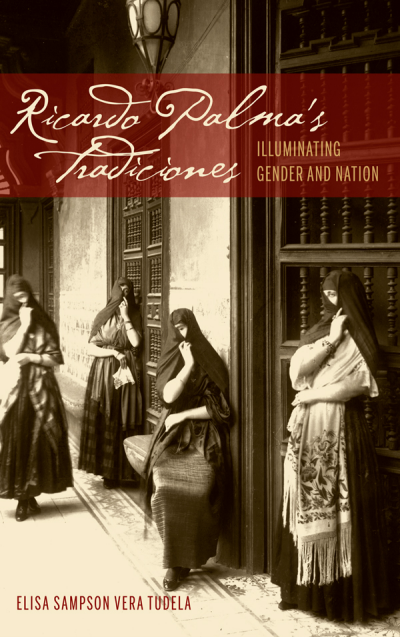
Ricardo Palma's Tradiciones
Illuminating Gender and Nation
Authors:
Publisher:
2012
Summary
Ricardo Palma’s Tradiciones is the first full-length account of Ricardo Palma informed by theories of cultural criticism. Elisa Sampson Vera Tudela sheds new light on important aspects of Palma’s work. She offers a fresh interpretation of the relations between history and literature – perhaps the most discussed aspect of Palma’s work – engaging with new critical thinking on historicism and examining the significance of the marginal and the anecdotal in Palma’s work. By using the tools of postcolonial cultural criticism, Vera Tudela considers Palma’s encounter with modernity, arguing that his recuperation of colonial history plays a crucial part in imagining the modern future. Most innovatively, Vera Tudela examines the multiple and contradictory notions of femininity in nineteenth-century Latin America and in Palma’s writing, showing how a historical consideration of the sexual politics of cultural production transforms our understanding of many of the assumptions about this period. Finally, by applying the insights of cultural geography in analysing the racial, sexual and political identity of domestic, urban and national space in Palma’s writing, Vera Tudela demonstrates that Palma’s literary maps and topographies are uniquely revelatory of questions of power and agency. In its exploration of sexual politics and nationhood, Ricardo Palma’s Tradiciones presents Palma as a proto-modernist who paved the way for many of the experiments of twentieth-century Latin American narrative fiction.
Keywords
Search publication
Bibliographic data
Edition
1/2012
Copyright Year
2012
ISBN-Print
978-1-61148-412-0
ISBN-Online
978-1-61148-413-7
Publisher
Lexington, Lanham
Language
English
Pages
184
Product Type
Monograph
Table of contents
ChapterPages
Acknowledgments No access
Introduction No access
CHAPTER ONE. Pyrotechnic History No access
CHAPTER TWO. Phosphorescent Literature No access
CHAPTER THREE. The Rhetoric of Gender No access
CHAPTER FOUR. Women’s Voices in Narrative No access