, to see if you have full access to this publication.
Monograph No access
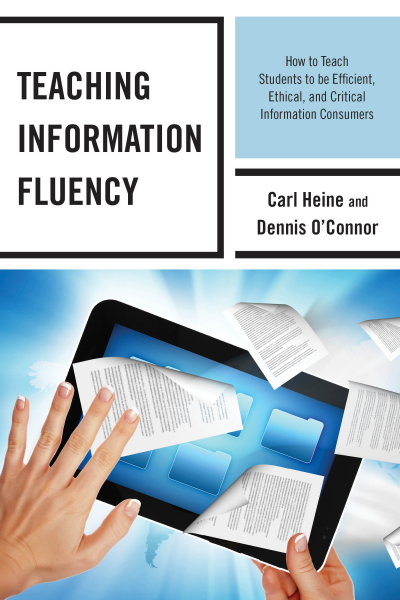
Teaching Information Fluency
How to Teach Students to Be Efficient, Ethical, and Critical Information Consumers
Authors:
|
Publisher:
2013
Summary
Teaching Information Fluency describes the skills and dispositions of information fluency adept searchers. Readers will receive in-depth information on what it takes to locate, evaluate, and ethically use digital information.
The book realistically examines the abilities of Internet searchers today in terms of their efficiency and effectiveness in finding online information, evaluating it and using it ethically. Since the majority of people develop these skills on their own, rather than being taught, the strategies they invent may suffice for simple searches, but for more complex tasks, such as those required by academic and professional work, the average person’s performance is adequate only about 50% of the time.
The book is laid out in five parts: an introduction to the problem and how search engine improvements are not sufficient to be of real help, speculative searching, investigative searching, ethical use and applications of information fluency. The intent of the book is to provide readers ways to improve their performance as consumers of digital information and to help teachers devise useful ways to integrate information fluency instruction into their teaching, since deliberate instruction is needed to develop fluency. Since it is unlikely that dedicated class time will be available for such instruction, the approach taken embeds information fluency activities into classroom instruction in language arts, history and science.
Numerous model lessons and resources are woven into the fabric of the text, including think-alouds, individual and group search challenges, discussions, assessments and curation, all targeted to Common Core State Standards as well as information fluency competencies.
Search publication
Bibliographic data
Edition
1/2013
Copyright Year
2013
ISBN-Print
978-0-8108-9062-6
ISBN-Online
978-0-8108-9063-3
Publisher
Rowman & Littlefield, Lanham
Language
English
Pages
216
Product Type
Monograph
Table of contents
ChapterPages
Contents No access
Figures No access
Tables No access
Foreword No access
Acknowledgments No access
Prologue No access
Chapter 1. Digital Information Fluency in an Age of Information Consumption No access
Chapter 2. Information Fluency, Achievement, and the Common Core No access
Chapter 3. Self-Taught Search-Box Strategies No access
Chapter 4. Internet Search Challenges No access
Chapter 5. Investigative Searching No access
Chapter 6. Investigative Case Study No access
Chapter 7. Ethical Consumption No access
Chapter 8. Embedding Information Fluency No access
Chapter 9. Curation: Applied Information Fluency No access
Epilogue: Looking Back No access Pages 173 - 174
Appendix: Model Lessons and Instructional Resources No access Pages 175 - 196