, to see if you have full access to this publication.
Monograph No access
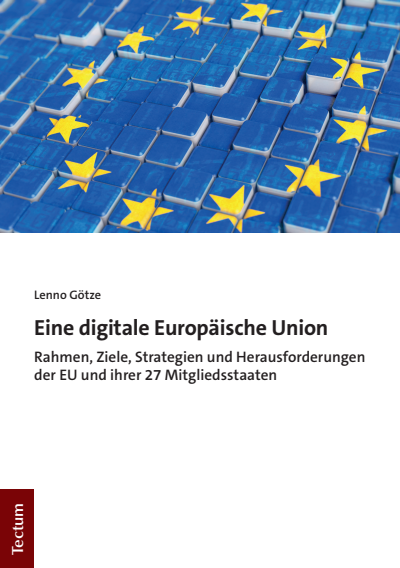
Eine digitale Europäische Union
Rahmen, Ziele, Strategien und Herausforderungen der EU und ihrer 27 Mitgliedsstaaten
Authors:
Publisher:
2024
Summary
Digitalisation is changing our world at an unprecedented speed. The European Union and its member states are key players in dealing with the opportunities and challenges associated with digitalisation: Using digital strategies, they formulate goals, develop perspectives, allay fears and create a binding legal basis. In short, political frameworks at the national and European levels must be understood and analysed as key components of digitalisation. In this study, Lenno Götze compiles the digitalisation strategies of the EU and its 27 member states, analysing and comparing digitalisation policies at both levels and placing them in the global context of leading digital powers such as the USA.
Keywords
Search publication
Bibliographic data
Copyright Year
2024
ISBN-Print
978-3-8288-5150-4
ISBN-Online
978-3-8288-5151-1
Publisher
Tectum, Baden-Baden
Language
German
Pages
254
Product Type
Monograph
Table of contents
ChapterPages
Titelei/Inhaltsverzeichnis No access Pages I - XII
1.1 Erkenntnisinteresse No access
1.2 Leitende Fragestellungen No access
1.3 Forschungsstand und -literatur No access
1.4 Methodisches Vorgehen No access
2.1.1 Synonyme: Industrie 4.0 und die Digitale Revolution No access
2.1.2 Weitere Begrifflichkeiten No access
2.2 Kritikfelder der Digitalisierung No access
2.3.1 Von der ersten zur dritten industriellen Revolution No access
2.3.2 Die vierte industrielle Revolution No access
3.1.1 Programmatische Definition No access
3.1.2 Finanzielle Bedeutung No access
3.2 Inhaltliche und instrumentelle Bedeutung No access
3.3 Rechtsgrundlagen No access
4. Der globale Kontext No access Pages 61 - 66
5.1 Die Digitale Agenda für Europa No access
DESI – Entwicklung der europäischen Mitgliedstaaten 2017–2022 No access
5.3 Strategie für einen digitalen Binnenmarkt No access
5.4 Die Datenschutz-Grundverordnung No access
5.5 Digitale Agenda 2020: Gestaltung der digitalen Zukunft Europas No access
5.6 Europas digitale Dekade: Der Digitale Kompass 2030 No access
5.7 Digitale Rechte und Grundsätze No access
6.1.1 Republik Finnland No access
6.1.2 Königreich Dänemark No access
6.1.3 Königreich der Niederlande No access
6.1.4 Königreich Schweden No access
6.1.5 Irland No access
6.1.6 Republik Malta No access
6.1.7 Königreich Spanien No access
6.1.8 Großherzogtum Luxemburg No access
6.1.9 Republik Estland No access
6.2.1 Republik Österreich No access
6.2.2 Republik Slowenien No access
6.2.3 Französische Republik No access
6.2.4 Bundesrepublik Deutschland No access
6.2.5 Republik Litauen No access
6.2.6 Portugiesische Republik No access
6.2.7 Königreich Belgien No access
6.2.8 Republik Lettland No access
6.2.9 Italienische Republik No access
6.3.1 Tschechische Republik No access
6.3.2 Republik Zypern No access
6.3.3 Republik Kroatien No access
6.3.4 Ungarn No access
6.3.5 Slowakische Republik No access
6.3.6 Republik Polen No access
6.3.7 Hellenische Republik No access
6.3.8 Republik Bulgarien No access
6.3.9 Rumänien No access
7. Inhaltliche Schnittmengen in „der“ Digitalisierung zwischen der EU und ihren Mitgliedstaaten No access Pages 203 - 216