, to see if you have full access to this publication.
Edited Book No access
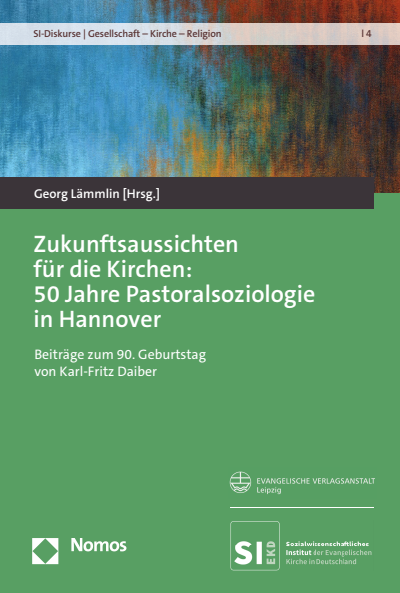
Zukunftsaussichten für die Kirchen: 50 Jahre Pastoralsoziologie in Hannover
Beiträge zum 90. Geburtstag von Karl-Fritz Daiber- Editors:
- Series:
- SI-Diskurse | Gesellschaft – Kirche – Religion, Volume 4
- Publisher:
- 2022
Keywords
Search publication
Bibliographic data
- Copyright Year
- 2022
- ISBN-Print
- 978-3-8487-8934-4
- ISBN-Online
- 978-3-7489-3213-0
- Publisher
- Nomos, Baden-Baden
- Series
- SI-Diskurse | Gesellschaft – Kirche – Religion
- Volume
- 4
- Language
- German
- Pages
- 280
- Product Type
- Edited Book
Table of contents
ChapterPages
- Titelei/Inhaltsverzeichnis No access Pages 1 - 12
- Einleitung No access Pages 13 - 24Authors:
- Authors:
- 1 Soziologie und kirchliche Praxis No accessAuthors:
- 2 Pastoralsoziologie und Kirchensoziologie No accessAuthors:
- 3 Die Theoriebildung als Aufgabe No accessAuthors:
- 4 Die Integration soziologischer und theologischer Fragestellungen No accessAuthors:
- 5 Pastoralsoziologie als praktisch-theologische Disziplin No accessAuthors:
- Pastoralsoziologie und die Evangelisch-lutherische Landeskirche Hannovers No access Pages 37 - 40Authors:
- Authors:
- Vorbemerkung No accessAuthors:
- 1 Biographisches No accessAuthors:
- 2 Noch einmal Jahre zurück No accessAuthors:
- 3 Die ArkiF-Zeit No accessAuthors:
- 4 FERES No accessAuthors:
- 5 CISR/ISSR No accessAuthors:
- 6 Biographisches, Teil II No accessAuthors:
- Authors:
- Eine soziologische Dissertation No accessAuthors:
- Die Kirche als soziale Organisation No accessAuthors:
- Praktische Theologie als Handlungswissenschaft No accessAuthors:
- Kirchliche Handlungsfelder No accessAuthors:
- Die religiöse Dimension der Gesellschaft No accessAuthors:
- Predigt als religiöse Rede No accessAuthors:
- Der Osten ruft! No accessAuthors:
- Was es noch zu berichten gäbe No accessAuthors:
- Sozialität: ein Gespräch No accessAuthors:
- Literatur von Karl-Fritz Daiber No accessAuthors:
- Authors:
- Authors:
- Der Kontext der Ausbildungsreform No accessAuthors:
- Weg durch die Institutionen No accessAuthors:
- Zwischenbilanz No accessAuthors:
- Authors:
- Eine neue Disziplin der Praktischen Theologie – und das kirchliche Interesse No accessAuthors:
- Wirklichkeitsgewinn und Ideologiekritik No accessAuthors:
- Zwischenbilanz No accessAuthors:
- Authors:
- Zur Wirkungsgeschichte des Konzepts der Pastoraltheologie No accessAuthors:
- Zur Wirkungsgeschichte von PSA und PSI No accessAuthors:
- Statt einer Bilanz No accessAuthors:
- Literatur No accessAuthors:
- Authors:
- Prolog: Der Anlass für Durchführung der Studie No accessAuthors:
- 1 Ausgangspunkte für die Studie No accessAuthors:
- 2 Erhebungsverfahren und Stichproben No accessAuthors:
- 3 Aus der qualitativen Teilstudie: Kirchenaustritt als Prozess No accessAuthors:
- Authors:
- 4.1 Anlässe zum Kirchenaustritt No accessAuthors:
- 4.2 Austrittsgründe No accessAuthors:
- 4.3 Bedeutung der Kirchensteuer No accessAuthors:
- Authors:
- Religiosität in der Generationenfolge No accessAuthors:
- Religiöse Praxis No accessAuthors:
- 5 Fazit No accessAuthors:
- Epilog: Eckpunkte zum Wandel des Kirchenaustritts in den letzten 50 Jahren No accessAuthors:
- Literatur No accessAuthors:
- Authors:
- 1 „Die Trauung als Ritual“ – Persönlich-biographischer Zugang No accessAuthors:
- 2 „Es geht um das Verstehen religiöser Phänomene“ – Impulse einer pastoralsoziologischen Perspektive für den Pfarrberuf No accessAuthors:
- 3 Stärkung religionshermeneutischer Kompetenz – Folgerungen für die Ausbildung No accessAuthors:
- 4 Schluss: Pastoralsoziologie heute No accessAuthors:
- Literatur No accessAuthors:
- Authors:
- I Die gesellschaftliche Funktion des Pfarrberufs No accessAuthors:
- II Pastoralsoziologie in der Vikariatsreform No accessAuthors:
- III Ein besonderer Moment No accessAuthors:
- IV Herausforderungen No accessAuthors:
- Fazit No accessAuthors:
- Literatur No accessAuthors:
- Authors:
- 1 Einleitung – wovon reden wir? No accessAuthors:
- Authors:
- 2.1 Die Anfänge und die Wiederentdeckung No accessAuthors:
- 2.2 Beispiel 1: Organisation und Entwicklung – Das Gemeindebarometer No accessAuthors:
- 2.3 Beispiel 2: Vernetzung und Funktionen – Gemeinden im Sozialraum No accessAuthors:
- 2.4 Neue Tendenzen und Herausforderungen – Gemeinden während der Corona-Pandemie No accessAuthors:
- 3 Ausblick – Vielfalt der Gemeinden, Folgen für die Pastoralsoziologie No accessAuthors:
- Literatur No accessAuthors:
- Authors:
- Authors:
- Das Doppelgesicht der Moderne No accessAuthors:
- Modernisierungseuphorie No accessAuthors:
- Widersprüchliche Moderne No accessAuthors:
- Authors:
- Neuorientierung No accessAuthors:
- Gestaltwandel von Kirche No accessAuthors:
- Entkirchlichung des Christentums No accessAuthors:
- Veränderung der Rolle der Kirchen im Verhältnis zum Christentum No accessAuthors:
- Literatur No accessAuthors:
- Authors:
- 1 Eine kurze Geschichte des zap No accessAuthors:
- Authors:
- Ausgangslage No accessAuthors:
- Theologische Methode No accessAuthors:
- Basisannahmen No accessAuthors:
- Kirchlicher Bedarf No accessAuthors:
- Dienstleistungen und Geschäftsmodell No accessAuthors:
- Kund*innen/Zielgruppen No accessAuthors:
- USP im Wettbewerb No accessAuthors:
- 3 Allgemeine Beispiele aus der Arbeit des zap No accessAuthors:
- 4 Einige weiterführende Beobachtungen zum Diskurs der katholisch verantworteten Pastoralsoziologie No accessAuthors:
- Literatur No accessAuthors:
- Authors:
- Einstimmung No accessAuthors:
- Einordnung No accessAuthors:
- Das Kompositum Pastoralsoziologie No accessAuthors:
- Praktisch-theologische Längslinien No accessAuthors:
- Anregungen No accessAuthors:
- Literatur No accessAuthors:
- Authors:
- 1 Wie soll man in die Zukunft blicken, wenn der Elefant den Blick verstellt? No accessAuthors:
- 2 Ein Erkundungsbeispiel: Wie lässt sich kirchliche „Vitalität“ ergründen? No accessAuthors:
- 3 Fazit No accessAuthors:
- Literatur No accessAuthors:
- Authors:
- Literatur No accessAuthors:
- Pastoralsoziologische Perspektiven: Aufbrüche zur Beteiligungs- & Netzwerkkirche im Kontext von Partizipation und multiprofessionellen Teams No access Pages 205 - 210Authors:
- Die Relationalität der Religionssoziologie No access Pages 213 - 220Authors:
- Authors:
- 1 Annäherung an das Thema No accessAuthors:
- 2 Kirchenmitgliedschaft als Untersuchungsfeld No accessAuthors:
- 3 Die Kirchenmitgliedschaftsuntersuchungen der EKD – Kirchensoziologie „at its best“ No accessAuthors:
- 4 Kirchenmitgliedschaftsforschung im Zusammenspiel von Kirche, Theologie und Soziologie – eine erste Zusammenfassung No accessAuthors:
- 5 Ausblick No accessAuthors:
- Literatur No accessAuthors:
- Authors:
- Literatur No accessAuthors:
- Authors:
- 1 Herausforderungen der postmodernen Gesellschaft für Religion und Kirche No accessAuthors:
- 2 Kirchen und Religionsgemeinschaften auf dem religiösen Markt in Deutschland No accessAuthors:
- 3 Etablierte Kirchen im Aufbruch – Entwicklung neuer Gemeindeformen No accessAuthors:
- 4 Zweites Kirchengemeindebarometer – Forschungsdesign und Stichprobe No accessAuthors:
- Authors:
- 5.1 Gemeindeaktivitäten und Gottesdienste No accessAuthors:
- 5.2 Öffentlichkeitsarbeit und Mitgliedergewinnung/-bindung No accessAuthors:
- 5.3 Vergangene und zukünftige Entwicklung der Gemeinden No accessAuthors:
- 6 Schlussbetrachtung No accessAuthors:
- Literatur No accessAuthors:
- Ausblick auf die VI. Kirchenmitgliedschaftsuntersuchung der EKD im Herbst 2022 No access Pages 275 - 280Authors: