, to see if you have full access to this publication.
Edited Book No access
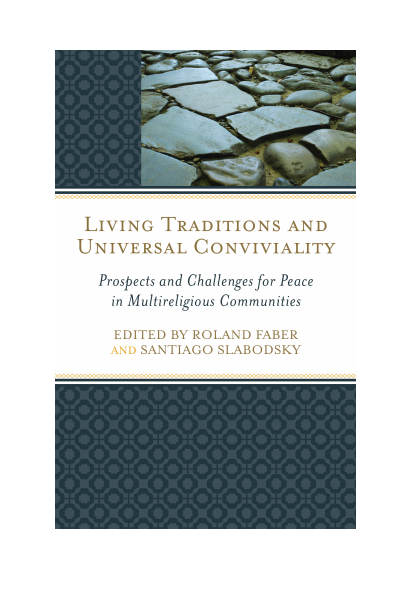
Living Traditions and Universal Conviviality
Prospects and Challenges for Peace in Multireligious Communities
Editors:
|
Publisher:
2016
Summary
The World Parliament of Religions adopted the view that there will not be peace in this world without including peace among religions. Yet, even with the unified force of the world’s religions and wisdom traditions, this cannot be accomplished without justice among people. In one way or another, “unity” among religions, as based on justice and the will to accept the other’s religions and even irreligiosity as means of justice, will not prevail without an internal and external, spiritual, theological, philosophical and practical investigation into the very reasons for religious strife and fanaticism as well as the resources that people, cultures, religions and wisdom traditions might provide to disentangle them from the injustices of their host regimes, and to seek the “balance” that leads to a measure of universal fairness among the multiplicity of religious and non-religious expressions of humanity.
“Conviviality” expresses the depth and breadth of “living together,” which itself can be understood as a translation of a central term of Whitehead's philosophy and the process tradition—“concrescence” (growing together, becoming concrete)—as it is recently and increasingly used in different discourses to name the concrete community of difference of individuals, cultures, and religions in appreciation of the mutual inclusiveness of their lives.
This book seeks to bring together experts from different religious (and non-religious) traditions and spiritual persuasions to suggest ways in which the living wisdom traditions might contribute to, and transform themselves into, a universal conviviality among the people, cultures and religions of this world for a common future. It wishes to test the resources that we can contribute to this concurrent and urgent matter, aware of Whitehead's call for a radical transformation of power and violence in thought and action as, perhaps, the ultimate theory of conflict resolution.
Search publication
Bibliographic data
Edition
1/2016
Copyright Year
2016
ISBN-Print
978-1-4985-1335-7
ISBN-Online
978-1-4985-1336-4
Publisher
Lexington, Lanham
Language
English
Pages
269
Product Type
Edited Book
Table of contents
ChapterPages
Contents No access
List of Abbreviations No access
Introduction No access
1 Conviviality No access
2 From Violence to Tolerance No access
3 From Tolerance to Unity No access
4 How Wicca Contributes to Religious Conviviality No access
5 Conviviality with Dao No access
6 Inclusive Religions’ Affirmation of Life and Political Agency No access
7 Political Liberalism, Conviviality, and Process Thought No access
8 The Fire of Desire No access
9 The Unspeakable Conviviality of Becoming No access
10 “Must ‘religion’ always remain as a synonym for ‘hatred’?” No access
11 Tools for Religious Conviviality No access
12 The Problem of the Two Ultimates and the Proposal of an Ecozoics of the Deity No access
13 Zones of Conviviality in Multireligious Education No access
14 Whiteheadian Perspective-Taking as a Basis for “Peace” through Interfaith Dialogue No access
Epilogue No access Pages 259 - 260
Index No access Pages 261 - 264
About the Editors and Contributors No access Pages 265 - 269
Similar publications
from the topics "Religion und Theologie allgemein"