, to see if you have full access to this publication.
Monograph No access
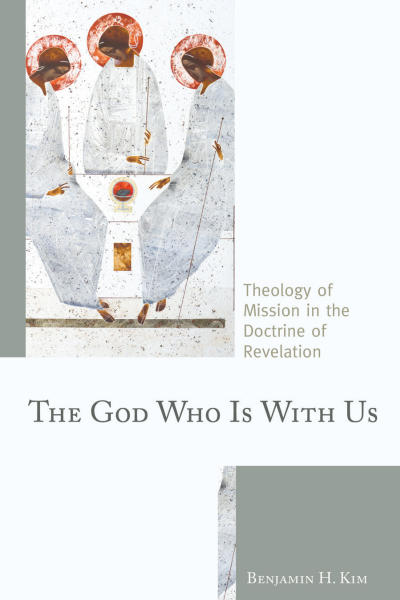
The God Who Is with Us
Theology of Mission in the Doctrine of Revelation
Authors:
Publisher:
2022
Summary
Contemporary theologies of mission rely on the central concept of the missio Dei, which states that mission properly belongs to the triune God over the church. However, present accounts fail to establish any corresponding link between God’s trinitarian economy and ontology. In other words, the problem of the missio Dei is the problem of the break between the act and being of God. Benjamin H. Kim argues that a repair is needed for missio Dei theology, and this repair is found in reexamining Barth’s doctrine of revelation. In doing so, the locus of mission moves from God’s trinitarian sending to his trinitarian revealing. The repair is further advanced by Dietrich Bonhoeffer through his concept of person, which functions as the unity of act and being. This account returns mission to its original definition, which was intended to describe the inner-trinitarian being of God in relation to humanity. The concept of person recovers this meaning of mission by locating it first in the person of Christ and second, in the collective person of the church existing as the Christ community. Thus, Bonhoeffer’s description of revelation in terms of personhood provides and account that is more faithful to the missio Dei’s core insights.
Keywords
Search publication
Bibliographic data
Edition
1/2022
Copyright Year
2022
ISBN-Print
978-1-9787-1530-1
ISBN-Online
978-1-9787-1531-8
Publisher
Lexington, Lanham
Language
English
Pages
220
Product Type
Monograph
Table of contents
ChapterPages
Contents No access
Abbreviations No access
Introduction No access
Re-examining Missio Dei Theology No access Pages 1 - 42
The Theology of the Missio Dei No access Pages 43 - 82
Karl Barth and the Mission of Revelation No access Pages 83 - 120
Dietrich Bonhoeffer and the Person of Mission No access Pages 121 - 154
Reconstructing a Theology of Mission No access Pages 155 - 194
Conclusion No access Pages 195 - 200
Bibliography No access Pages 201 - 214
Index No access Pages 215 - 218
About the Author No access Pages 219 - 220
Similar publications
from the topics "Religion und Theologie allgemein"
Edited Book No access
Jan Hermelink, Alexander Deeg, Michael Domsgen, Kristin Merle, Marcell Saß