, to see if you have full access to this publication.
Monograph No access
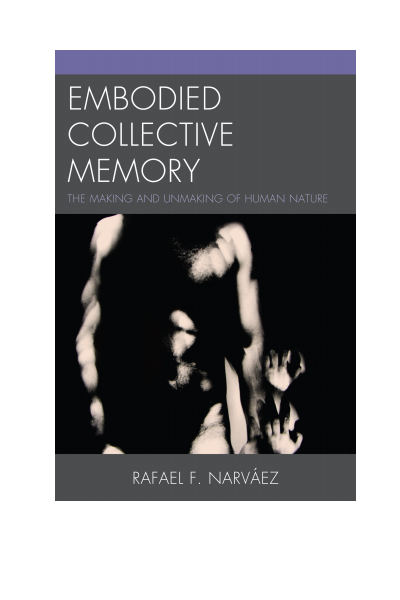
Embodied Collective Memory
The Making and Unmaking of Human Nature
Authors:
Publisher:
2012
Summary
The human body is not a given fact; it is not, as Descartes believed, a “machine made up of flesh and bones.” The body is acquired, achieved, and learned. It is thus full of mimetic and mnemonic implications. The body remembers, and it does so in collectively relevant ways. Gestures, corporeal and phonetic rhythms, affective idioms, and emotional styles — perceptual, sensorial, motoric, and affective schemata — are all largely learned in shared social contexts.
These aspects of the embodied experience are often consigned to habit, to bodily automatisms, and to corporeal memories that reflect aspects of culture. But if the body reflects certain aspects of culture that press to become naturalized and organically attached to social actors, it also resists these kinds of cultural pressures. These adaptive and resistive dynamics, as this book shows, are not without consequences for individuals and groups. These processes can result in both advantages and disadvantages for social actors. They can take us toward certain futures while foreclosing others. It is therefore necessary to understand how, why, and to what extent corporeal memories are constructed but also resisted, modified, or created anew.
Keywords
Search publication
Bibliographic data
Edition
1/2012
Copyright Year
2012
ISBN-Print
978-0-7618-5879-9
ISBN-Online
978-0-7618-5880-5
Publisher
Hamilton Books, Lanham
Language
English
Pages
222
Product Type
Monograph
Table of contents
ChapterPages
Contents No access
Acknowledgments No access
Introduction No access Pages 1 - 8
1 The French Sociological Tradition No access Pages 9 - 22