, to see if you have full access to this publication.
Monograph No access
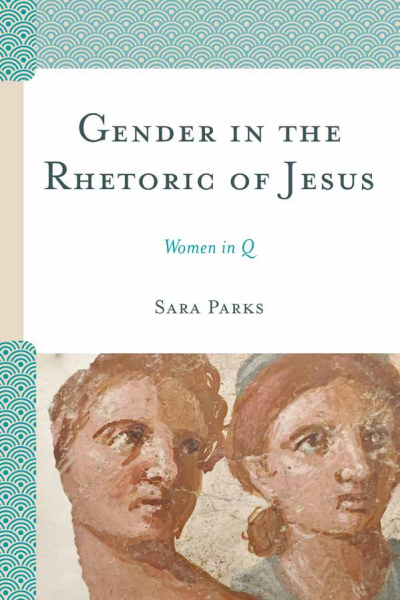
Gender in the Rhetoric of Jesus
Women in Q
Authors:
Publisher:
2019
Summary
Examining the hypothetical earliest layer of Jesus’ sayings known as Q, Sara Parks argues that Jesus deliberately crafted parabolic teachings regarding the basileia of God to appeal to both male and female adherents. For a century after Q, vestiges of gender-paired teachings popped up in multiple independent texts related to Jesus, from Mark to Paul to the Synoptics and John—making it more likely that this inclusion of women originated with Jesus himself. In Gender and the Rhetoric of Jesus, Parks engages the divided scholarship on the meaning of gendered pairs for an evaluation of the gender politics of Q, arguing that even though Q’s peculiar rhetoric of gender equality was an innovation, it was also a product of its time, as evidenced in other contemporaneous texts which struggled with ambiguous equalities, from Philo to Musonius Rufus to Joseph and Aseneth. In addition, she shows that Jesus’ rhetoric of gender, as remembered in Q constitutes some of the earliest evidence for the study of first-century Jewish women, and women in Christian origins.
Keywords
Search publication
Bibliographic data
Edition
1/2019
Copyright Year
2019
ISBN-Print
978-1-9787-0198-4
ISBN-Online
978-1-9787-0199-1
Publisher
Lexington, Lanham
Language
English
Pages
192
Product Type
Monograph
Table of contents
ChapterPages
Contents No access
Acknowledgments No access
Chapter 1 No access Pages 1 - 26
Chapter 2 No access Pages 27 - 50
Chapter 3 No access Pages 51 - 76
Chapter 4 No access Pages 77 - 110
Chapter 5 No access Pages 111 - 126
Chapter 6 No access Pages 127 - 150
Chapter 7 No access Pages 151 - 160
Appendix No access Pages 161 - 164
Bibliography No access Pages 165 - 184
Index of Ancient Sources No access Pages 185 - 186
Index of Modern Authors No access Pages 187 - 188
Subject Index No access Pages 189 - 190
About the Author No access Pages 191 - 192
Similar publications
from the topics "Religion und Theologie allgemein"