, to see if you have full access to this publication.
Edited Book No access
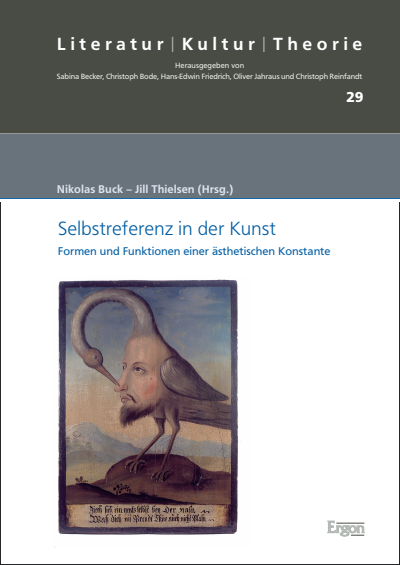
Selbstreferenz in der Kunst
Formen und Funktionen einer ästhetischen Konstante- Editors:
- |
- Series:
- Literatur - Kultur - Theorie, Volume 29
- Publisher:
- 2020
Search publication
Bibliographic data
- Edition
- 1/2020
- Copyright Year
- 2020
- ISBN-Print
- 978-3-95650-737-3
- ISBN-Online
- 978-3-95650-738-0
- Publisher
- Ergon, Baden-Baden
- Series
- Literatur - Kultur - Theorie
- Volume
- 29
- Language
- German
- Pages
- 389
- Product Type
- Edited Book
Table of contents
ChapterPages
- Titelei/Inhaltsverzeichnis No access Pages 1 - 10
- Authors: |
- 1. Vorbemerkungen No accessAuthors: |
- 2. Formen und Funktionen (literarischer) Selbstreferenz No accessAuthors: |
- 3. Perspektiven No accessAuthors: |
- 4. Zum Aufbau des Bandes No accessAuthors: |
- Authors:
- Zum heuristischen Wert eines systemtheoretischen Konzepts am Beispiel der Literatur der Weimarer Republik No accessAuthors:
- Authors:
- Authors:
- 1. Spektakuläre Selbstreferenz: Aporien und Infinitisierungen No accessAuthors:
- Authors:
- 2.1 Befremden und Erstaunen No accessAuthors:
- 2.2 Ehrfurcht, Grusel und Horror No accessAuthors:
- 2.3 Komik No accessAuthors:
- 3. Illustrationen No accessAuthors:
- Authors:
- Authors:
- 1. Drei Formen sprachlicher Selbstbezüglichkeit No accessAuthors:
- 2. Rochaden in El Ingenioso Caballero Don Quijote de La Mancha (1605/1615) No accessAuthors:
- 3. Hinweise zur Karriere und Relevanz der Rochade No accessAuthors:
- Authors:
- Authors:
- 1. Bemerkungen zum Fiktionsbegriff No accessAuthors:
- 2. Inszenierte Romantheorie: Diskussionen der Figuren bzw. Erzählerinstanzen über die Form des Romans No accessAuthors:
- 3. Die selbstreflexive Form des Quijote No accessAuthors:
- Authors:
- Die Aufklärung der Anakreontik No accessAuthors:
- Authors:
- Johann Karl Wezels Wilhelmine Arend, oder die Gefahren der Empfindsamkeit No accessAuthors:
- Authors:
- Authors:
- 1. Der Ursprung des Romans als selbstreferentielles Buch No accessAuthors:
- 2. Selbstreferentialität im Interesse der aemulatio No accessAuthors:
- 3. Der Roman als romantisches Buch No accessAuthors:
- Zur Relation von Selbstreferenz im lyrischen Früh- und Spätwerk Goethes No access Pages 141 - 150Authors:
- Authors:
- Authors:
- 1. Vorbemerkung und Thesenbildung No accessAuthors:
- 2. Erzählmodell/Rekonstruktion der erzählten Geschichten No accessAuthors:
- 3. Konzepte der Person: Identität und Anthropologie No accessAuthors:
- 4. Rolle der Kunst: Kollektive Identitätsbildung No accessAuthors:
- 5. Sprech- und Erzählsituation No accessAuthors:
- 6. Metaleptische Potenziale und Performativität No accessAuthors:
- Authors:
- Authors:
- 1. Rahmen, Räume, Spiegelungen No accessAuthors:
- 2. Appassionata I: Musikzeitliche Selbstverhältnisse No accessAuthors:
- 3. Appassionata II: Form mit Aus- und Einbrüchen No accessAuthors:
- 4. Appassionata III: Ideengang und reflexive Kontrolle mit Schiller No accessAuthors:
- 5. Appassionata IV: Dialektische Reflexivität mit Adornos Hegel No accessAuthors:
- 6. Appassionata V: Kritik der beiden Kontextualisierungen No accessAuthors:
- 7. Appassionata VI: Abstecher zu Schelling No accessAuthors:
- 8. Fazit mit „Presto“ No accessAuthors:
- Authors:
- Authors:
- 1. Einführung No accessAuthors:
- Authors:
- 2.1 Juliusz Słowacki No accessAuthors:
- 2.2 Beniowski No accessAuthors:
- 2.3 Exemplarisches No accessAuthors:
- 3. Schluss No accessAuthors:
- Authors:
- Authors:
- 1. Die Struktur der Zweigliedrigkeit No accessAuthors:
- Authors:
- 2.1 Die ontologisch-epistemologische Krise No accessAuthors:
- 2.2 Spiegelungsphänomene No accessAuthors:
- 2.3 Claude Monet: „Das Pfirsichglas“ – Meta-Ikonizität und die ‚Realismus‘-Problematik No accessAuthors:
- 2.4 Realität/‚Leben‘ vs. Zeichen/‚Tod‘: Semiotische Komplementaritätsregularitäten des ‚poetischen Realismus‘ No accessAuthors:
- Selbstreferentielle Kartographie? No access Pages 223 - 240Authors:
- Authors:
- Authors:
- 1. Denken und Schreiben No accessAuthors:
- 2. Schreiben und Scheitern No accessAuthors:
- 3. Rechtfertigung und Selbstreferenz No accessAuthors:
- Authors:
- Authors:
- I No accessAuthors:
- II No accessAuthors:
- III No accessAuthors:
- IV No accessAuthors:
- Authors:
- Authors:
- 1. Entstehung No accessAuthors:
- 2. Hybride Bauform No accessAuthors:
- 3. Semantik oder Das Spiel mit Zuschauern und Zuschauerwissen No accessAuthors:
- 4. Modalität No accessAuthors:
- 5. Rezeptionen als Spiele No accessAuthors:
- Authors:
- Authors:
- Satzbau-Grammatik No accessAuthors:
- Lyrik der Verweigerung No accessAuthors:
- Goethe und kein Ende No accessAuthors:
- Das neue Gedicht als Kunstprodukt No accessAuthors:
- Authors:
- Authors:
- 1. Das bin doch ich – oder doch nicht? No accessAuthors:
- 2. Poetik der Entgrenzung No accessAuthors:
- 3. Die Aktualität des Wetters von gestern No accessAuthors:
- 4. Resümee No accessAuthors:
- Authors:
- Authors:
- 1. Ausweitung der Gattungsgrenzen – Franz Josef Degenhardt No accessAuthors:
- 2. Rekurs auf die Gattungsgeschichte – Udo Lindenberg No accessAuthors:
- 3. Verweigerung von Gattungskonventionen – Stephan Remmler No accessAuthors:
- Authors:
- Authors:
- 1. Präliminarien No accessAuthors:
- 2. Kurze Zusammenfassung der Handlung No accessAuthors:
- 3. Selbstreflexivität und Selbstreferenz in Twin Peaks No accessAuthors:
- Authors:
- 4.1 Die Roadhouse-Sequenz No accessAuthors:
- 4.2 Coopers Traum No accessAuthors:
- 4.3 ‚Black Lodge‘ No accessAuthors:
- 5. Conclusio No accessAuthors:
- Authors:
- Authors:
- 1. Vorbemerkung und These – Renaturierung, Rekultivierung und die Medien No accessAuthors:
- 2. Der Letzte räumt die Erde auf: Wall.E und seine Umwelt No accessAuthors:
- 3. Die profitabelste aller möglichen Welten: BUY N LARGE No accessAuthors:
- 4. Medien. Kultureller Speicher, Fremd- und Selbstreferenzierungen No accessAuthors: