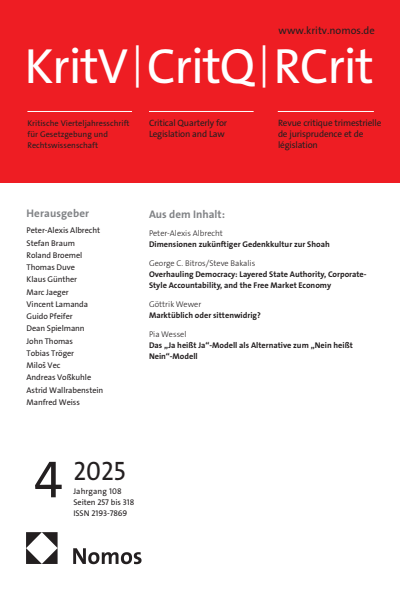
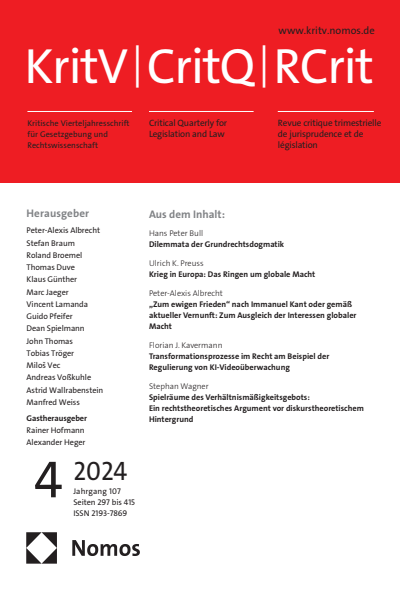
The CritQ provides a forum for open, interdisciplinary-oriented, intradisciplinary-informed critical jurisprudence grounded in the theory-praxis dialogue. As a European law journal the CritQ reflects the required legal adjustments towards societal, political, and systemic directives in Europe. The list of editors that counts the law schools of the University of Luxembourg and Goethe-University Frankfurt am Main among them, has been prominently enhanced with pioneers of European jurisdiction (Marc Jaeger, Vincent Lamanda, Dean Spielmann, Sir John Thomas, Andreas Voßkuhle). The European public is conveyed by language, thus the CritQ presents articles in German, English, and French.
This article examines the normative, praxeological, and peace-oriented dimensions of a future culture of Holocaust remembrance. It argues that the memory of the Shoah is not merely a retrospective engagement with history but constitutes a...
In the contemporary era of executive aggrandizement and crisis-driven governance, traditional representative democracy faces structural challenges that procedural reforms cannot resolve. Drawing on the institutional analysis of Bitros (2022) and...
Courts have reached differing conclusions on the question of whether it is morally reprehensible for executives at public broadcasters to receive a lifetime transitional payment or pension – amounting to many times the average pension that...
“No means No” – this is the current legal position under German sexual criminal law. According to Section 177(1) of the German Criminal Code (StGB), sexual acts committed against the recognizable will of the other person are punishable. In...