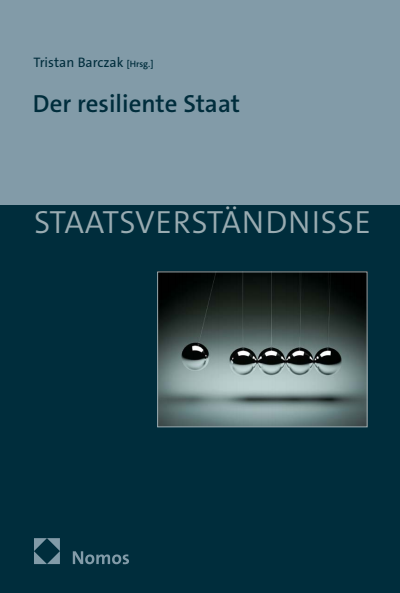
Oswald Spengler was an excellent, fascinating and challenging thinker who combined his impressive insights into human nature with the axiom that all human creations – including the state and its forms of government – are doomed to die. Progress towards an ideal final state, paradise on earth, is an illusion. The capable statesman should not be broken by this Nietzschean insight. His task is to make use of the existing possibilities that are determined by history. Spengler's philosophical and political foundations, his attitude towards democracy and dictatorship, and his charisma as a global thinker are put up for discussion. With contributions by Anke Birkenmaier | David Engels | John Farrenkopf | Florian Hartleb | Hans-Christof Kraus | Rebecca Krug | Fabian Mauch | Zoltán Sebestyén Novák | Harun Pačić | Michael Thöndl | Ulrich Wyrwa
Keywords
Search publication
Bibliographic data
Edition
1/2026
Copyright Year
2026
ISBN-Print
978-3-7560-1587-0
ISBN-Online
978-3-7489-4570-3
Publisher
Nomos, Baden-Baden
Series
Staatsverständnisse
Volume
193
Language
German
Pages
282
Product Type
Edited Book
Table of contents
ChapterPages
Editorial No access
Editorial – Understanding the State No access
Authors:
1. Oswald Spengler – Leben und Werk No access
2. Spenglers Politik- und Staatsverständnis No access
3. Der Staat im Feuer der vereinten Weltrevolutionen No access
4. Das Titelbild und die Beiträge des Sammelbands No access
Authors:
1. Der metaphysische Aspekt No access
2. Der erkenntnistheoretische Aspekt No access
3. Der kulturtheoretische Aspekt No access
Authors:
1. Einleitung No access
2. Allgemein No access
3.1. Antike No access
3.2. Ägypten No access
3.3. Sumer No access
3.4. Orient No access
4. Ausblick No access
Authors:
1. Einleitung No access
2. Morphologie der Weltgeschichte No access
3. Weltgeschichte als Staatengeschichte No access
3. Staat und Reich als „leere Begriffe“ No access
4. Nachwort No access
Authors:
1. Einleitung: Die Relevanz für heute No access
2. Gründe für die Bedeutung von Spenglers Ideen für heute No access
3. Ein fiktiver 10-Punkte Plan No access
4. Bezug zur digitalen Disruption No access
5. Fazit: Spenglers Schatten im 21. Jahrhundert No access
Authors:
I. No access
II. No access
III. No access
IV. No access
Authors:
1. Die Spengler-Rezeption in Italien in den 1920er und 1930er Jahren No access
2. Der Beginn der wechselseitigen Wahrnehmung von Spengler und Mussolini No access
3. Richard Korherrs Schrift über den Geburtenrückgang No access
4. Spenglers Buch „Jahre der Entscheidung“ No access
5. Mussolinis Rezension der „Jahre der Entscheidung“ No access
6. Fazit No access
Authors:
1.1. Spenglers Sicht auf den Nationalsozialismus bis 1933 No access
2.1. Joseph Goebbels (1920–1925) No access
2.2 Gregor Strasser und der ›linke‹ Flügel der NSDAP No access
2.3 Richard Korherr No access
3.1 Die Jahre der Entscheidung No access
3.2 Vermittlungsversuche, Kooperationsangebote und Kaltstellung No access
3.3 Nationalsozialistische Reaktionen auf Jahre der Entscheidung No access
4. Nach 1933 No access
5. Schluss No access
Spengler, Deutschland, Kontrafaktische Geschichte, und Machtpolitik No access Pages 191 - 212
Authors:
Authors:
1. Einleitung No access
2. Spenglers Russlandbild No access
3. Die Spengler-Rezeption in Russland No access
4. Fazit No access
Authors:
1. Einleitung No access
2. Die Bedeutung der Geschichte Mexikos für Spenglers Werdegang No access
3. Spengler als Literat No access
4. Koloniale Szenarien No access
5. Der Untergang des Abendlandes und das Montezuma Szenario No access
6. Mexiko in Der Untergang des Abendlandes No access