, to see if you have full access to this publication.
Monograph No access
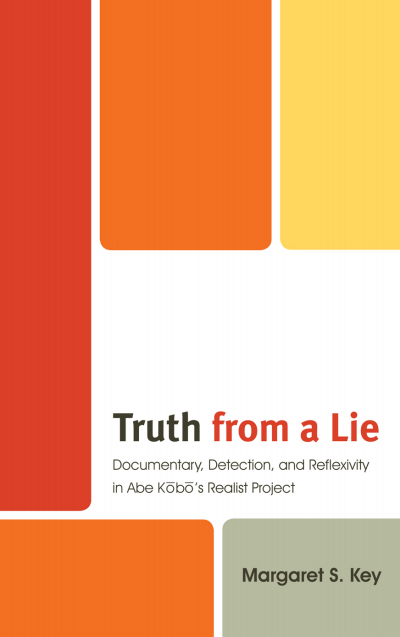
Truth from a Lie
Documentary, Detection, and Reflexivity in Abe Kobo's Realist Project
Authors:
Publisher:
2011
Summary
Critics typically regard Abe Kobo (1924-93) as writing against realism, due to his avant-garde aesthetics that challenged the Naturalist realism dominating the literary mainstream and the Socialist realism of the orthodox Left in postwar Japan. He considered his work thoroughly realist, however, and starting in the early 1950s in a series of avant-garde art and literary groups, he championed the possibility of a vital, contemporary realism that challenged the reader to question the "reality" represented in the text through increasingly self-conscious writing strategies. Through a reassessment of the texts in which he worked out his theory of realism, this study traces the development of his commitment to making "truth from a lie"—to fiction, drama, and reportage that openly display their artifice. Key argues that the reflexivity of Abe's texts, which lay bare their own processes of artificial construction in order to reflect how our everyday sense of reality is constructed and maintained, created a critical space for metatextual ideas that were not acknowledged by the literary establishment of his time and have yet to be recognized by critics today. Undergirding his theory and practice of realism was a critique of conventional documentary and of the classic detective story. The texts examined here expose the degree to which the documentarian and the detective are active fabricators of meaning rather than neutral observers of fact. By paying close attention to the tension between the documentary and the fictive in Abe's works, Key draws out the ethical implications of his documentary approach, arguing persuasively that the documentary qualities of his writing, such as its valorization of objectivity over psychologism and the realm of "concrete things" over abstraction are strategies for challenging the dominant assumptions about what constitutes good ethics and good art, as well as the relationship between these two spheres.
Search publication
Bibliographic data
Edition
1/2011
Copyright Year
2011
ISBN-Print
978-0-7391-3875-5
ISBN-Online
978-0-7391-3877-9
Publisher
Lexington, Lanham
Language
English
Pages
197
Product Type
Monograph
Table of contents
ChapterPages
Contents No access
Acknowledgments No access
Note to the Reader No access
Introduction No access Pages 1 - 6
Chapter 1: Investigating the "Concrete Things" of Reality No access Pages 7 - 34
Chapter 2: Blurring the Boundary between the Fictional and the Real: Ishi no me and "Jiken no haikei" No access Pages 35 - 74
Chapter 3: True Lies and Dramatized Facts: Mokugekisha and Mihitsu no koi No access Pages 75 - 124
Chapter 4: Memoir, Murder, and the Metafictional Aesthetic inTanin no kao No access Pages 125 - 166
Chapter 5: Rethinking Abe: Objectivity as Epistemology, Ethics, and Art No access Pages 167 - 174