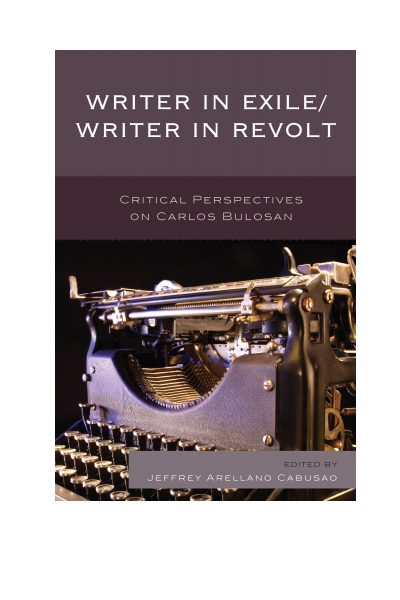
Writer in Exile/Writer in Revolt
Critical Perspectives on Carlos Bulosan- Editors:
- Publisher:
- 2016
Summary
Writer in Exile/Writer in Revolt: Critical Perspectives on Carlos Bulosan gathers pioneering essays by major scholars in Filipino American Studies, American Studies, and Philippine Studies as well as historic documents on Carlos Bulosan’s work and life for the first time. This anthology—which includes rare, out-of-print documents—provides students, instructors, and scholars an opportunity to trace the development of a body of knowledge called Bulosan criticism within the United States and the Philippines. Divided into four major sections that explore Bulosan’s prolific literary output (novels, poems, short stories, essays, letters, and editorial work), the anthology opens with an introduction to the early stages of Bulosan criticism (1950s-1970s) and ends with recent work by senior scholars in Asian American Studies that suggests new directions for engaging multiple dimensions of Bulosan’s twin commitment to art and social change.
Keywords
Search publication
Bibliographic data
- Edition
- 1/2016
- Copyright Year
- 2016
- ISBN-Print
- 978-0-7618-6767-8
- ISBN-Online
- 978-0-7618-6768-5
- Publisher
- University Press, Lanham
- Language
- English
- Pages
- 343
- Product Type
- Edited Book
Table of contents
- Contents No access
- Appendix No access
- Part I. Bulosan’s Voice: Listening to the Manong Generation No access
- Part II. Location of Exile: Creating an Alter/native Filipino Literary Practice No access
- Part III. Writer as Worker: Broadening the Bulosan Canon No access
- Part IV. Collective Memory and Revolt: Becoming Filipino—Becoming Free No access
- Bibliography No access
- Notes No access
- 1 Bulosan Now (1958) No access
- Biography No access
- Toward Regrounding the Psyche No access
- To Change, Not Just Interpret No access
- One Divides into Two No access
- Enter: The Trickster Clown No access
- Sketch of a Materialist Poetics No access
- Dialectics in Action No access
- Exorcising the Dream No access
- Metamorphoses of the Other No access
- Unleashing the Daemon No access
- A Celebration of Praxis No access
- Not a Picnic Nor a Dinner Party No access
- Arming the Spirit No access
- Notes No access
- 4 Filipino Writers in Exile (1963) No access
- Reality of the Third World No access
- A Literature of Realism No access
- A Literature of Revolution No access
- A Literature of Hope and Growth No access
- Notes No access
- References No access
- The Satiric Mode No access
- Tension between the Old and the New No access
- The Pitfalls of the New Culture No access
- Exaggerations and Caricatures No access
- The Craft of Satire No access
- Notes No access
- Works Cited No access
- Notes No access
- Why Bulosan? Why The Laughter of My Father? No access
- L.M. Grow’s “Casebook” Thesis No access
- Masculine Domination and Bulosan’s Female Types No access
- Gendered Lessons in Regard to Local Women No access
- Gendered Lessons as They Relate to “City Women” No access
- Gendered Lessons Relating to the Matriarch No access
- Women’s Responses to Masculine Domination No access
- Resistance on the Part of Local Women No access
- Resistance on the Part of Women from the “Outside” No access
- Resistance on the Part of the Matriarch No access
- Adding Class to the Analysis No access
- Conclusion No access
- Coda No access
- Notes No access
- Notes No access
- Third World Writing No access
- The Third World Writer’s Perspective No access
- War as Struggle No access
- Notes No access
- II. No access
- III. No access
- Appendix A. Photo Reproductions of Bulosan Letters No access
- Appendix B. Transcripts of Bulosan Letters No access
- Works Cited No access
- Notes No access
- Deeply Disturbed No access
- Driven No access
- I. Re-imagining the Class Struggle No access
- II. Back to the Future: Bulosan’s Literary Homecoming No access
- III. Filipino Blues: Beyond the Pleasure Principle No access
- IV. Tales of the Skin Trade: The Third World Writer in the Literary Marketplace No access
- V. Conclusion: The Inter/national Allegory No access
- Works Cited No access
- Notes No access
- How and When Did You Meet Carlos Bulosan? No access
- How Would You Describe Carlos’ Political Work? No access
- How about You? When Did You Become an Organizer for the Union? No access
- Where There a Lot of Filipinos There? No access
- Was It Difficult to Be a Woman Union Organizer in the 1930s? No access
- Carlos Bulosan Wrote in His Book that “In Many Ways It Was a Crime to be Filipino in California. I Came to Know that the Public Streets Were Not Free to My People.” This Is a Vivid Description of What the Filipinos Faced at That Time, Isn’t It? No access
- Were the Filipinos a Majority among the Agricultural Workers You Were Organizing? No access
- Were You Successful in Organizing the Agricultural Workers? No access
- So Carlos Moved in That Circle of Progressive Filipinos? No access
- At That Time, the US Government Did Not Just Blacklist Progressive Organizers, but Also Attempted to Deport Those That They Perceived as Dangerous “Alien Elements.” Were There a Lot of Filipino Union Organizers Deported? No access
- Did Carlos Talk to You Extensively about His Life in the Philippines? No access
- Was He Writing All the Time and Did You Collaborate with Him? No access
- Were You Ever Discriminated Upon by Your Friends and Political Circle because You Were Going Out with a Filipino? No access
- What Was Bulosan’s Vision for Change in the Philippines? No access
- Did He Want to Go Back to the Philippines? No access
- I. Introduction No access
- II. The Issues Addressed by Bulosan No access
- III. Bulosan as a Writer-Activist-Philosopher No access
- IV. Conclusion No access
- Notes No access
- How Did You Get Interested in Carlos Bulosan? No access
- How Did You Start Doing Archival Work on Bulosan? No access
- How Did You Come Up with the Idea to Ask for Bulosan’s FBI Files? No access
- What Did You Discover as You Sorted through Bulosan’s FBI Files? No access
- What about the People Who Charge That Any Files, Bulosan’s Files Included, Are Just Lies, a Fabrication, Slander? No access
- How Do the FBI Files Enable Us to Re-Think Bulosan’s Life and Work? No access
- How Does Your Research Help Us to Understand Filipino American Forms of Resistance? No access
- In What Ways Is Bulosan’s Life and Work Relevant for a New Generation of Activists-Scholars? No access
- Does Your Research Open a Space to Help Us Grapple with Local and Global Politics Today? No access
- How Did Your Work on Bulosan Change Your Perceptions of Him? No access
- Related Short and Long Range Goals of the Bulosan Project No access
- Final Thoughts No access
- “Link Between PI, US Commies Bared,” The Manila Chronicle, 1951 No access
- “Defense Chief Orders Arrest of Second MIS Man for Third Degree,” The Manila Times, 1951 No access
- Works Cited and For Further Reading No access
- Notes No access
- Part One: Toward A Renewal of the Filipino Critical Imagination No access
- Part Two: The Filipino Peasant Imagination Versus the “Civilizing Mission” of American Studies and Ethnic Studies No access
- Proletarian Pinoy Meets “Ilustrado” No access
- Class as Network of Social Relations No access
- The Peasantry Intervenes No access
- “Little Brown Brother’s” Burden No access
- The Manong’s Red-White-and-Blue Blues No access
- Vogue of Transnationalisque Chic No access
- Ultimo Adios No access
- References No access
- Notes No access
- 20 American Dream: The Habitable Land (2016) No access
- Editorial No access
- To Whom It May Concern No access
- Terrorism Rides the Philippines No access
- Images courtesy of E. San Juan, Jr. and the Philippines Cultural Studies Center No access
- Poetry No access
- Novels No access
- Short Stories No access
- Nonfiction No access
- Anthologies No access
- Bulosan Criticism No access
- Notes No access
- About the Editor No access