, to see if you have full access to this publication.
Edited Book No access
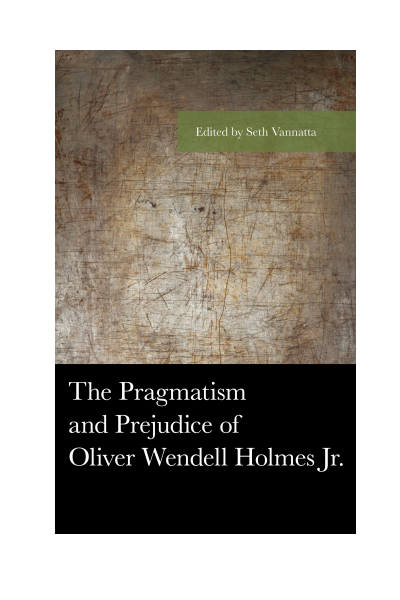
The Pragmatism and Prejudice of Oliver Wendell Holmes Jr
Editors:
Publisher:
2019
Summary
This book investigates the extent to which various scholarly labels are appropriate for the work of Oliver Wendell Holmes, Jr. As Louis Menand wrote, “Holmes has been called a formalist, a positivist, a utilitarian, a realist, a historicist, a pragmatist, (not to mention a nihilist).” Each of the eight chapters investigates one label, analyzes the secondary texts that support the use of the term to characterize Holmes’s philosophy, and takes a stand on whether or not the category is appropriate for Holmes by assessing his judicial and nonjudicial publications, including his books, articles, and posthumously published correspondences. The thrust of the collection as a whole, nevertheless, bends toward the stance that Holmes is a pragmatist in his jurisprudence, ethics, and politics. The final chapter, by Susan Haack, makes that case explicitly.
Edited by Seth Vannatta, this book will be of particular interest to students and faculty working in law, jurisprudence, philosophy, intellectual history, American Studies, political science, and constitutional theory.
Search publication
Bibliographic data
Edition
1/2019
Copyright Year
2019
ISBN-Print
978-1-4985-6124-2
ISBN-Online
978-1-4985-6125-9
Publisher
Lexington, Lanham
Language
English
Pages
206
Product Type
Edited Book
Table of contents
ChapterPages
Contents No access
Acknowledgments No access
Introduction No access Pages 1 - 8
1 The Jobbist No access Pages 9 - 30
2 The Nihilist No access Pages 31 - 48
3 The Utilitarian No access Pages 49 - 66
4 The Social Darwinist No access Pages 67 - 86
5 The Natural Law Theorist No access Pages 87 - 116