, to see if you have full access to this publication.
Monograph No access
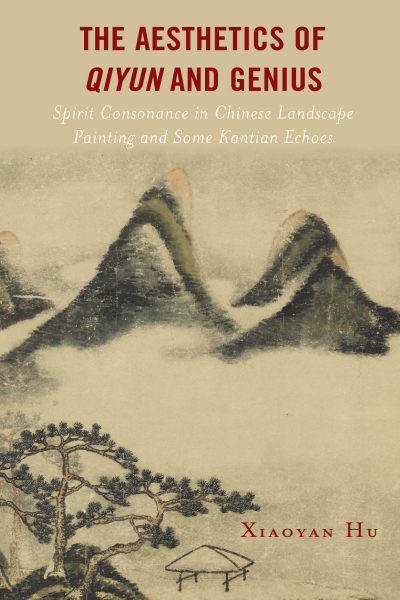
The Aesthetics of Qiyun and Genius
Spirit Consonance in Chinese Landscape Painting and Some Kantian Echoes
Authors:
Publisher:
2021
Summary
In The Aesthetics of Qiyun and Genius: Spirit Consonance in Chinese Landscape Painting and Some Kantian Echoes, Xiaoyan Hu provides an interpretation of the notion of qiyun, or spirit consonance, in Chinese painting, and considers why creating a painting—especially a landscape painting—replete with qiyun is regarded as an art of genius, where genius is an innate mental talent. Through a comparison of the role of this innate mental disposition in the aesthetics of qiyun and Kant’s account of artistic genius, the book addresses an important feature of the Chinese aesthetic tradition, one that evades the aesthetic universality assumed by a Kantian lens.
Drawing on the views of influential sixth to fourteenth-century theorists and art historians and connoisseurs, the first part explains and discusses qiyun and its conceptual development from a notion mainly applied to figure painting to one that also plays an enduring role in the aesthetics of landscape painting. In the light of Kant’s account of genius, the second part examines a range of issues regarding the role of the mind in creating a painting replete with qiyun and the impossibility of teaching qiyun. Through this comparison with Kant, Hu demystifies the uniqueness of qiyun aesthetics and also illuminates some limitations in Kant’s aesthetics.
The publication of this work was supported by the Fundamental Research Funds for the Central Universities (project no: 3213042202A1).
Search publication
Bibliographic data
Edition
1/2021
Copyright Year
2021
ISBN-Print
978-1-7936-4156-4
ISBN-Online
978-1-7936-4157-1
Publisher
Lexington, Lanham
Language
English
Pages
300
Product Type
Monograph
Table of contents
ChapterPages
Dedication No access
Contents No access
List of Illustrations No access
Preface No access
Acknowledgments No access
Chronology No access
Notes No access
Introduction No access
1.1 Various Translations of qiyun shengdong No access
1.2 Qi No access
1.3 Yun No access
1.4 Shengdong No access
1.5 Qiyun in Xie He’s First Law and Zhang Yanyuan’s Echo No access
Interim Conclusion No access
Notes No access
Introduction No access
2.1 Jing Hao’s Application of Qiyun in Landscape Painting No access
2.2. Guo Ruoxu’s Emphasis on Mental Disposition in Relation to Qiyun No access
2.3 Tang Hou’s Valuing of Qiyun in Art Connoisseurship No access
2.4 A Synthesis of the Notion of Qiyun No access
Interim Conclusion No access
Notes No access
Introduction No access
3.1 The Idea-Giving of Genius in the Qiyun-Focused Context No access
3.2 Problems with Projecting Kant’s View of Genius into the Qiyun-Oriented Context No access
Interim Conclusion No access
Notes No access
Introduction No access
4.1 The Rule of No Rule or the Rule of Nature No access
4.2 The Intention of No Intention: The Valuing of Unselfconsciousness No access
4.3 Unteachable Spontaneity and Somatic Training of Genius No access
Interim Conclusion No access
Notes No access
Introduction No access
5.1 Yipin, Qiyun, and the Mental Disposition of Yi No access
5.2 The Craze of Yipin, and the Impossibility of Imitating Qiyun No access
Interim Conclusion No access
Notes No access
Introduction No access
6.1 The Purification of the Mind through Meditation No access
6.2 A City-Recluse-Artist’s Satisfaction: Heart in Tune with Forest and Stream No access
6.3 A Balanced Human Nature Fulfilled through Art in a Qiyun-Focused Context and in Schiller No access
Interim Conclusion No access
Notes No access
Introduction No access
7.1 Qiyun, Spiritual Kinship, and Sincere Will No access
7.2 The Reconciliation of Aesthetic Autonomy and Moral Relevance No access