, to see if you have full access to this publication.
Edited Book No access
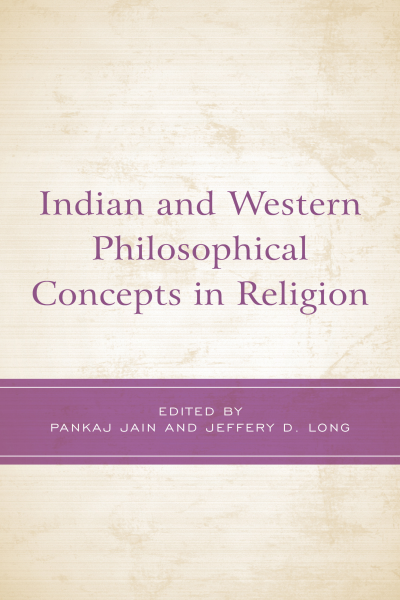
Indian and Western Philosophical Concepts in Religion
Editors:
|
Publisher:
2022
Summary
Philosophical concepts are influential in the theories and methods to study the world religions. Even though the disciplines of anthropology and religious studies now encompass communities and cultures across the world, the theories and methods used to study world religions and cultures continue to be rooted in Western philosophies. For instance, one of the most widely used textbooks used in introductory courses on religious studies, introduces major theoreticians such as Edward Burnett Tylor, James Frazer, Sigmund Freud, Emile Durkheim, Karl Marx, Max Weber, Mircea Eliade, William James, E. E. Evans-Pritchard, and Clifford Geertz. Their theories are based on Western philosophy. In contrast, in Indic philosophical systems, such as Buddhism, Hinduism, and Jainism, one of the common views on reality is that the world both within one self and outside is a flow with nothing permanent, both the observer and the observed undergoing constant transformation. This volume is based on such innovative ideas coming from different Indic philosophies and how they can enrich the theory and methods in religious studies.
Keywords
Search publication
Bibliographic data
Edition
1/2022
Copyright Year
2022
ISBN-Print
978-1-7936-2315-7
ISBN-Online
978-1-7936-2316-4
Publisher
Lexington, Lanham
Language
English
Pages
156
Product Type
Edited Book
Table of contents
ChapterPages
Contents No access
Introduction No access Pages 1 - 6
Doxography and Dialectic No access
Dialectic and Medicine No access
Buddhist Medical Sources No access
Āyurvedic Sources No access
Doxography and Therapy No access
The Semantic of Therapy in Buddhism No access
The Semantic of Therapy in Jainism No access
The Semantic of Therapy in Advaita-Vedānta No access
Views No access
Conclusion No access
Notes No access
Bibliography No access
Introduction No access
The World of the Self No access
The theories of the guṇas and bhāvas No access
The Demon Devotee No access
Dhvani No access
Holī No access
Conclusion and Reflections No access
Notes No access
Bibliography No access
Ludic Quality of Life No access
Liminality and Play No access
Philosophy as a Form of Play No access
Divine Play Depicted by Kavirāja No access
Critical Hermeneutical Dialogue No access
Concluding Remarks No access
Notes No access
Bibliography No access
Acknowledgment No access
References No access
Conclusion No access
Notes No access
References No access
Anekāntavāda as Anti-Reductionism No access
Being Honest about Our Hegemonic Meta-Narratives No access
Where I Am Going with All of This No access
Applications to the Contemporary Study of Religion No access
Conclusion No access
Notes No access
Bibliography No access
The Foundations of Buddhist Social Science No access
Advancing the Boundaries of Social Science: A Mahayana Perspective No access
The Nature of a Buddhist Social Science No access
Notes No access
References No access
Index No access Pages 149 - 152
Contributor Biographies No access Pages 153 - 156
Similar publications
from the topics "Religion und Theologie allgemein"
Edited Book No access
Jan Hermelink, Alexander Deeg, Michael Domsgen, Kristin Merle, Marcell Saß