, to see if you have full access to this publication.
Monograph No access
Philosophical Children in Literary Situations
Toward a Phenomenology of Childhood
Authors:
Publisher:
2020
Summary
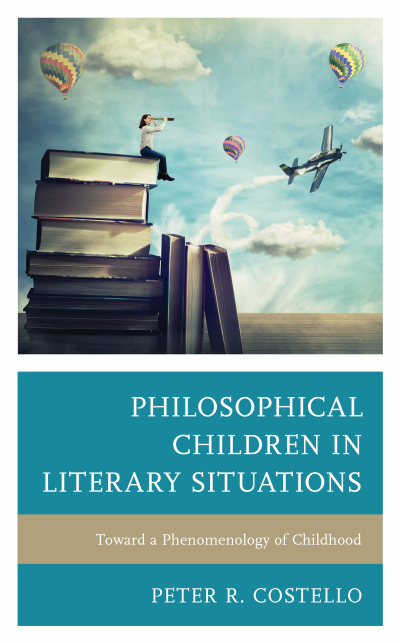
Philosophical Children in Literary Situations: Toward a Phenomenology of Education argues that both phenomenology and children’s literature can assist one another in understanding the lived experience of children. Through careful readings of central figures in the phenomenological tradition, including Husserl, Heidegger, and Merleau-Ponty, Costello introduces both the novice and the scholar to the phenomenological method of describing community, emotion, religion, gender, and loss—experiences that are central to all humans, but especially to the developing child. When turning to literary analysis, Costello uses the phenomenological theory discussed to open up the literary texts of familiar and award-winning children’s chapter books toward new layers of interpretation, reading such novels as To Kill a Mockingbird, A Wrinkle in Time, and Charlotte’s Web to participate in ongoing conversations about childhood perception within children’s literature studies and philosophy for children. Scholars of philosophy, education, literary studies, and psychology will find this book particularly useful.
Keywords
Search publication
Bibliographic data
Edition
1/2020
Copyright Year
2020
ISBN-Print
978-1-7936-0452-1
ISBN-Online
978-1-7936-0453-8
Publisher
Lexington, Lanham
Language
English
Pages
177
Product Type
Monograph
Table of contents
ChapterPages
Contents No access
Acknowledgments No access
Introduction No access Pages 1 - 12
1 Charlotte’s Web, Temporality, and the Transitions of Growth No access Pages 13 - 38
2 Reading Russell Hoban’s The Mouse and His Child as a Phenomenology of Emotion and of Community No access Pages 39 - 58
3 A Phenomenology of Sexuality and Movement in To Kill a Mockingbird No access Pages 59 - 82
4 A Phenomenology of Religious Experience in A Wrinkle in Time No access Pages 83 - 130
5 Toward a Phenomenology of Education in Merci Suárez Changes Gears No access Pages 131 - 152