, to see if you have full access to this publication.
Monograph No access
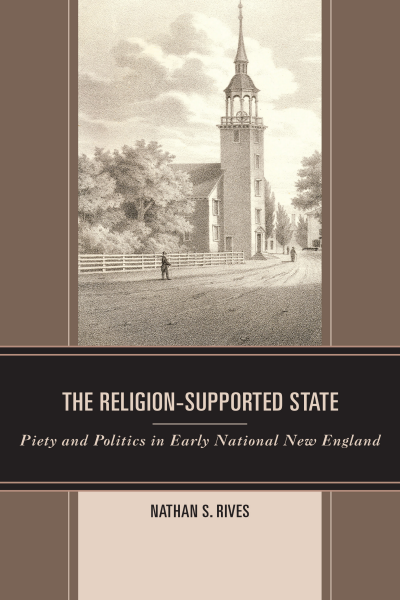
The Religion-Supported State
Piety and Politics in Early National New England
Authors:
Publisher:
2022
Summary
Between 1776 and 1850, the people, politicians, and clergy of New England transformed the relationship between church and state. They did not simply replace their religious establishments with voluntary churches and organizations. Instead, as they collided over disestablishment, Sunday laws, and antislavery, they built the foundation of what the author describes as a religion-supported state. Religious tolerance and pluralism coexisted in the religion-supported state with religious anxiety and controversy. Questions of religious liberty were shaped by public debates among evangelicals, Unitarians, Universalists, deists, and others about the moral implications of religious truth and error. The author traces the shifting, situational political alliances they constructed to protect the moral core of their competing truths. New England's religion-supported state still resonates in the United States in the twenty-first century.
Keywords
Search publication
Bibliographic data
Edition
1/2022
Copyright Year
2022
ISBN-Print
978-1-7936-5524-0
ISBN-Online
978-1-7936-5525-7
Publisher
Lexington, Lanham
Language
English
Pages
280
Product Type
Monograph
Table of contents
ChapterPages
Dedication No access
Contents No access
Acknowledgments No access
A Note about Denominational and Theological Terms No access